
Get the latest news to your email inbox FREE!

REGISTER

Get the latest news to your email inbox FREE!

REGISTER
HomeNewsProducers urged to inspect cereal crops amid fall armyworm outbreak

Producers urged to inspect cereal crops amid fall armyworm outbreak

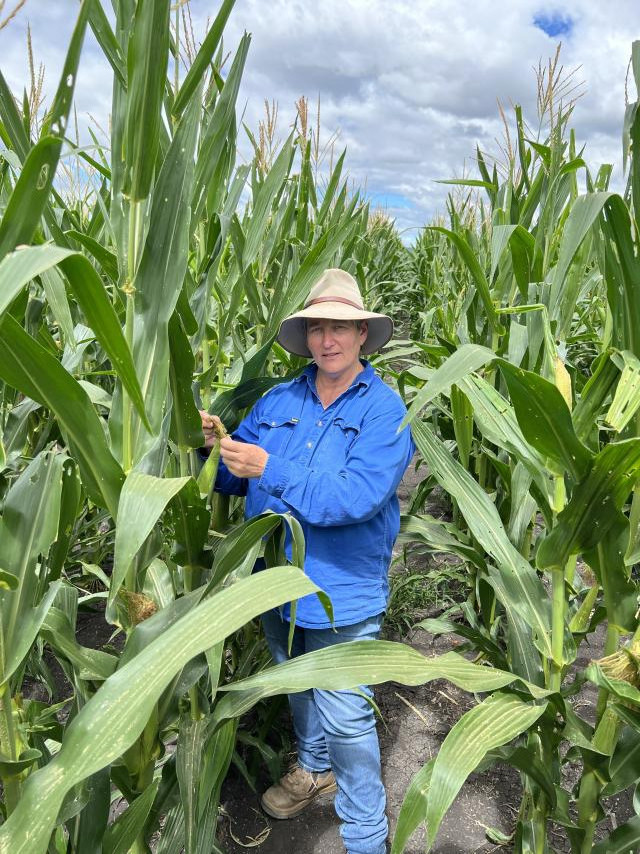
Dairy farmers and graziers are urged to inspect their crops amid fall armyworm (FAW) infestations in forage oats across southern-growing regions.

Reports of FAW impacting oats have surfaced from regions including the inner Downs, Southern Downs, Western Downs and Rolleston in central Queensland.

“Emerging and establishing crops are at greatest risk of complete defoliation and plant death,” Department of Agriculture and Fisheries principal entomologist Dr Melina Miles said.

“Growers and agronomists are encouraged to check crops for evidence of FAW within seven to 10 days of emergence.

“In oat–pasture mixes you may see damage to grasses and broadleaf pasture species when the FAW have consumed the oats and move as larger larvae.”

These infestations come at the end of the most severe season since the pest arrived in Australia in 2020.

If Queensland experiences a mild autumn, FAW activity in winter crops and pastures is expected to persist, but the rate of damage will slow as average temperatures decline.

Emerging and establishing crops are at greatest risk of complete defoliation and plant death.

Crop-checking intervals of seven to 10 days will avoid damaging infestations going undetected.

Look for windows or holes in leaves where small larvae have fed, or evidence of more substantial feeding with tillers cut off and plants completely eaten.

Bare patches in the paddocks and dying plants are indicative of more severe infestations.

Don’t rely just on finding damage — pull up damaged plants and confirm the presence of larvae (caterpillars).

Medium and large larvae may shelter under the soil surface at the base of plants during the day.

Carefully inspect the soil around the base of damaged plants. Damage to stems by these larger larvae can result in plant death from dehydration or disease.

Once larvae are 20mm long they will cause significant damage in a short period of time.Timely detection is crucial to minimise losses and safeguard yields.

If FAW is detected, growers should seek support from their local agronomist.

Further information: Resources on identification of FAW and symptoms of damage to oats and other crops are available on The Beatsheet (www.thebeatsheet.com.au).

If you think you’ve seen fall armyworm, call your local agronomist or contact the Department of Agriculture and Fisheries on 13 25 23 or visit daf.qld.gov.au
Digital Edition
Subscribe

Get an all ACCESS PASS to the News and your Digital Edition with an online subscription

Powder reinvents the nut

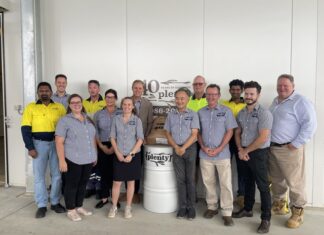
Kingaroy was re-established as the peanut capital of Australia with a nation-first production officially unveiled. Kingaroy’s Plenty Foods officially opened their nut powder facility...
More News

‘A leader and a mentor’: Industry pays tribute to Ian Burnett after fatal farm tragedy

The deaths of respected Central Queensland farmer Ian Burnett and his seven-year-old grandson have shocked Australia’s agricultural community. The 70-year-old primary producer and his grandson...

Funky Food wants imperfects

Funky Food is calling on farmers across Queensland and northern New South Wales to redirect surplus and cosmetically-imperfect fruit and vegetables to Australian households...

Friendship, tools and tea: The simple idea that strengthened Roma

For 20 years, Michael Reddan has watched a simple idea grow into one of Roma’s most valued community spaces. A place where conversation happens shoulder...

Biarra Valley frontline sale

Each year Biarra Valley Simmentals looks closely at the direction of our program and make considered decisions about the females we offer. This draft...

The ultimate weekend

Meatstock - Australia’s one-of-a-kind music and barbecue festival - is returning to Toowoomba Showgrounds bigger and better than ever on Friday 10 and Saturday...

Empowering adaptive graziers

Burnett Mary Regional Group is well and truly delivering on supporting landholders in fostering sustainable agriculture practices. From extension support to providing valuable resources...

Lachlan’s powerful legacy

It was as much about hope as it was about inspiration. About building resiliency and health into mind, body and spirit as well as...

Emerging leader secures Liz Alexander AgTech and Innovation Bursary

AgTech consultant and ecosystem builder Britta Marsh has received a career boost after securing the Liz Alexander Bursary for Leadership in AgTech and Innovation. The...

Cutting embryonic losses

Australian Wagyu producers now have access to a world-first genetic test designed to improve fertility, calving rates and profitability, following the commercial release of...

From gap year to trailblazer

Britta Marsh never expected agriculture to become her career, let alone to be recognised as a leader within the field. Yet the Brisbane-based AgTech consultant...