
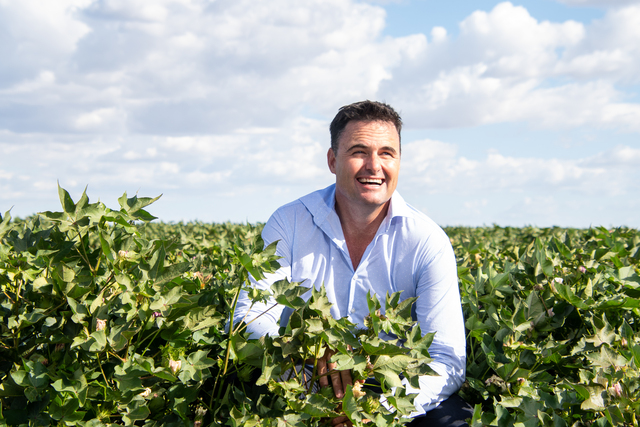
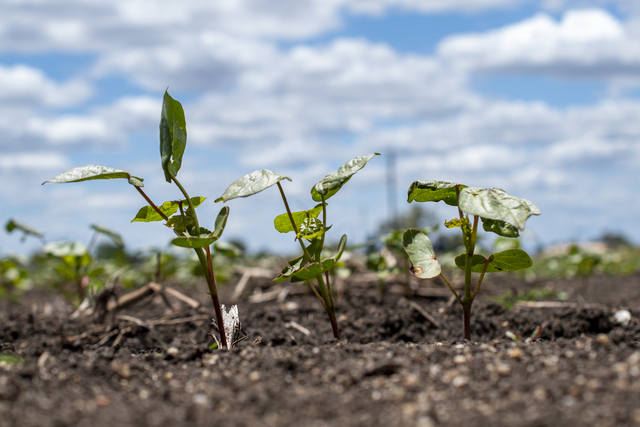

As cotton crops emerge from the ground in Queensland’s Central Highlands, growers are cautiously confident abot the impending season.
Emerald grower and Cotton Australia Board chair Nigel Burnett said with carryover from last season – and a welcome allocation from Fairbairn Dam – growers are positive.
“We had unseasonal rainfall in August and that enabled a good chunk of the area to be moisture planted, saving farmers from the initial flush-up irrigation and those crops are now out of the ground and looking very good.
“Since planting, the conditions have been warming up and growers are confident about the prospects for the season at this stage.
“I have planted more than 700 hectares so far and if there’s more rainfall over the coming weeks and months, I would look at planting more cotton into late October, November or even December.”
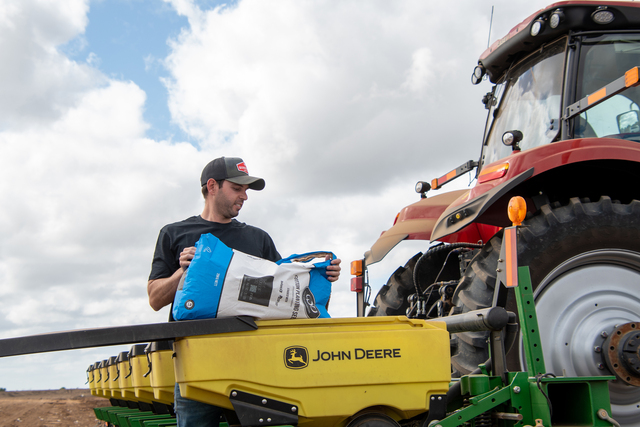
Planting is underway across much of Australia’s cotton growing regions, with some crops already out of the ground in warmer climates. Some growers are holding back for warmer weather while some in tropical areas won’t be planting until rain begins to fall.
Cotton Australia general manager Michael Murray said the signs for this season were positive with Australia’s 1500 cotton growers – 90 per cent of them family farmers – expecting to generate around 4.4 million bales or one million tonnes of quality fibre.
They are bound for export markets and a similar amount of cotton seed.
“This year we are expecting about 400,000 green hectares to be planted, predominantly in New South Wales and Queensland with crops also being planted in the Northern Territory and Western Australia,“ Mr Murray said.
“A result in line with expectations will see more than $3.1 billion generated for the national economy with most of that money filtering down into the 249 communities that benefit directly from cotton growing.”
Cotton planting usually occurs in early October in the core growing areas, but with a wide range of geographic areas now growing cotton, planting dates are widespread.
The global outlook for cotton is stable with a recent uptick in cotton futures attributed to potential damage to the US crop due to storms and heavy rain and a surprise reduction to US production forecasts.
“Despite the global situation we are still selling our cotton to a market wanting high quality product and we are experiencing good buyer support from across Asia including China,” Mr Murray said.
“Our growers remain positive on this season’s crop with good conditions including soil profiles, moisture content and water allocations and, for most, the current price still reflects a profitable outcome with all its flow-on benefits.”
Cotton Australia’s regional managers, based in each of the cotton growing regions, have provided up to date reports on each region:
Central Highlands:
Cotton planting has been underway for several weeks with cotton already out of the ground in some areas with some growers already undertaking first irrigations. The cotton is looking healthy, pleasing growers, with plant stand looking strong. The planting conditions were so good, as many got to plant on rain and it’s been so warm that plants were coming out of the ground within days.
Around 20,000 hectares of irrigated cotton is expected, with around 4000 hectares of dryland. Ginning will continue through to November, with some cotton still being carted into the gin from northern QLD growers.
Dawson and Callide Valleys
Some growers have started planting the expected 8500 hectares of irrigated cotton, with some already finished planting, while others planted in October. Dryland growers are expected to plant in November. There has been a good start to planting, with full allocations helping growers with a positive start to the cotton season.
Darling Downs
One grower has already planted 400 hectares of cotton for this coming season with 30,000 hectares of irrigated and 5000 hectares of dryland expected. Some recent rain has been welcomed but the weather is cooler so most growers will hold off planting until warmer temperatures in October.
Macintyre Valley
In the Macintyre, growers will be looking to start planting when soil temperatures increase.
Growers are expected to plant about 20,000 hectares irrigated and 8000 hectares dryland. There has been recent rainfall but this won’t affect cotton plants at the moment.
St George/Dirranbandi/Mungindi
Conditions have been unusual, with below average temperatures. In St George one grower has already planted 350 hectares of cotton with the majority expected to begin planting by 7 October.
In St George, 22,000ha of cotton is expected to be grown, with 15,000ha in Dirranbandi and 18,000ha in Mungindi.