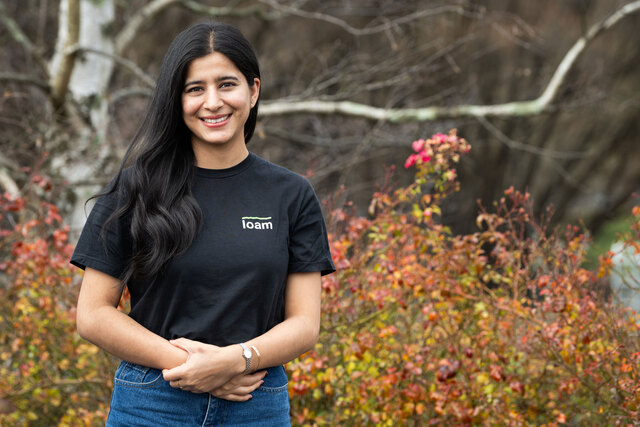
Introducing PhD student Aditi Sharma, who is researching carbon sequestration in the soils around Dalby, in collaboration with researchers from the University of Queensland.
Over the next three years, Aditi will use fungal-based technology to advance how farmers measure and understand soil carbon.
Australian ag-tech company Loam Bio has invested about $450,000 into the PhD project.
“The big question is,“ she said. “How can we store carbon in soils for the long-term, not just a season or two?“
To find out, she will use techniques such as “pulse stable isotope labelling“ in real-field conditions (to trace where carbon goes in soil) and density-based soil fractionation (to separate and study the different forms of soil organic carbon).
This work will help identify what farming practices are best at keeping carbon safely stored in soils.
Why does it matter? Because more durable soil carbon means healthier soils and stronger crops, which equates to value for growers.
“At the end of the day, this is not just about carbon credits,“ Aditi said.
“It is about helping farmers build healthier soils, improve water-holding capacity, manage nutrients more effectively and create more resilient systems so that farms and communities in these agricultural-focused regions can continue to prosper.“
Aditi said while many projects focused on increasing soil carbon levels, the challenge lay in understanding how much of that carbon actually remained in the soil.
She said embedding a PhD that used advanced tools such as stable isotope labelling and fractionation techniques generated high-quality scientific evidence on how different management practices influenced carbon sequestration pathways.
“This investment is not just about supporting one PhD, it is about creating the knowledge needed to offer growers and the carbon market a more reliable, long-lasting and high-quality soil carbon product,“ Aditi said.
“This research is important for farmers because it helps answer a question they often have: ’If I change my management practices and build soil carbon, how long will that carbon actually stay in my soil?’
“Farmers are making real investments in practices such as reduced tillage, stubble retention, fertiliser combinations and microbial inoculation and they want confidence that these efforts lead to long-term outcomes.“
According to Aditi, using stable isotope labelling methodology and soil fractionation for multiple years in real-field conditions, allows researchers to trace how carbon moves through soils and to identify what pools are more stable over the long term.
This means they can provide farmers with clearer guidance on practices most effective for building lasting soil carbon, while also improving soil health, resilience and productivity.
In the end, the research helps ensure that farmers are not only rewarded fairly in carbon markets but also see tangible agronomic benefits on their land.
Once she has her findings, Aditi will translate the science into practical outcomes.
On one side, the results will be published through peer-reviewed research, contributing to the wider scientific community’s understanding of soil carbon persistence.
At the same time – because this is an industry-embedded PhD – the findings will directly feed back into Loam’s programs with farmers, helping refine their management recommendations, fungal-based technologies and measurement approaches.
“The goal is to bridge the gap between research and practice: ensuring farmers get credible, science-backed guidance on how to build durable soil carbon, while also strengthening Loam’s ability to deliver premium, verifiable carbon credits,“ Aditi said.
“In this way, the outcomes will benefit both farmers and the broader carbon market.“
Finally, Aditi said her goal was to see regional areas in central and southern Queensland thriving. “Every farm is different and soils here face unique challenges with heat, variable rainfall and management pressures,“ she said.
“Our research in Dalby ensures the results are grounded in conditions local growers are familiar with.“