
Incredulous and furious Queensland pastoralists have united to oppose a big push to list buffel as a weed.
Beef producers covet the controversial yet critical grass as it provides fast-growing cattle fodder and can help reduce dust and soil erosion.
Environmental and Indigenous groups, however, have long warned it exacerbates grass fires, reduces biodiversity and impacts Aboriginal cultural practices.
AgForce Queensland Cattle president Lloyd Hick said classifying buffel as a weed would have “severe“ consequences for Queensland’s beef industry, including biological control research aimed at eradication.
“This is a direct threat to one of the most critical pasture species in Australia,“ he said.
Jacqueline Curley, Gipsy Plains Brahmans, Cloncurry said in the COWMAB against CACTI Facebook group:
“This is an issue every livestock producer needs to address … now.
“The time for sitting on hands and letting someone else do the hard yards of saving industry standards is over.
“This is a very, very serious issue that will not be fixed once the horse has bolted.
“Northern Territory and South Australia did not address it well. It is on their noxious weed list (since 2024 and 2019 respectively) and they will suffer the consequences of lost production.
“Queensland has some time left to address the issue.“
Ian McCamley, MCC Pastoral Pty Ltd, Rolleston, meanwhile, said in the COWMAB against CACTI Facebook group:
“I believe when one really thinks about it, Australia rides on the back of buffel grass. It beggars belief that there are people in Australia lobbying for a biological control for buffel.
“Rural communities would be decimated if we lost the productivity that can be directly attributed to buffel grass.
“Of course, with beef being such a critical export income earner, the economic loss would be felt across all of Australia.
“Of equal importance would be the massive environmental damage caused by the loss of buffel.
“My 45 years of self-funded research clearly shows that ground cover is the most critical thing to maintaining a healthy productive sustainable environment.
“By taking buffel grass out of the Australian environment, soil erosion would dramatically increase, rainfall would be lost to runoff rather than infiltrate as it does in a buffel pasture, evaporation would be unchecked, other plants, animals, birdlife and insects would be at huge risk with the ecosystem regression that would result.
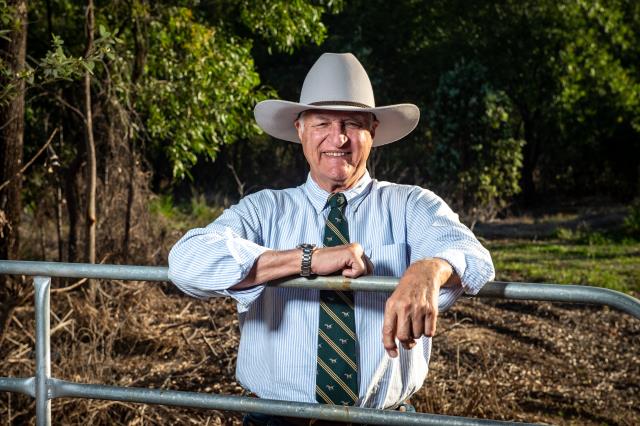
Kennedy MP Bob Katter pleaded for common sense to prevail.
“They want to list buffel grass as a weed. Give us a break! The north was built on buffel, Brahman, and bitumen—without it, we’d have a dust bowl instead of a cattle industry.
“Buffel grass wasn’t brought here by accident – it was introduced because it’s one of the best options we’ve got. It holds the soil together and keeps the cattle fed even during drought.
“Meanwhile, real pests like lantana, prickly acacia, rubber vine, feral pigs and cats are running wild — and the government wants to waste time attacking one of our best pasture grasses?
“Sometimes, you’ve got to wonder if these ’green’ groups, whose bidding the government is doing here, won’t stop until our entire agricultural industry is dead and we import everything into this country.
“This is anti-livestock ideology at its worst. Anyone pushing this nonsense needs their head read.“
Cattle Australia (CA) chief executive Dr Chris Parker said calls from environmental lobbyists to have it listed as a weed ignored the incredible contribution buffel grass has made to the economic viability and sustainability of the Australian beef industry.
Indeed, regional and rural Australia as a whole.
“It is a flawed ideology for buffel grass to be considered a weed of national significance when it has positive environmental, social and economic impacts for Australia and is absolutely vital for Australia’s agricultural and livestock industries,“ Dr Parker said.
“Buffel grass shares no characteristics with actual weeds of national significance.
“When compared to the environmental impact of lantana or blackberries, buffel grass should not even be in the same conversation.
“It is essential to the production of millions of kilograms of beef for Australian and international markets.
“In 2024, Australia exported 1,972,000 tonnes (carcass weight) of beef and the red meat supply chain employed more than 430,000 people, contributing tens of billions of dollars to the national economy and buffel grass has been critical to that success.
“It is clear there needs to be an urgent reform of the process used to assess the impact of non-native plant species, to ensure plant species of economic and agronomic significance are not targeted.
“And, immediate action should be taken to establish buffel grass as a Primary Production Strategic Asset.”