Sesame could be your new ’crop of the summer’.
Growers and agronomists gathered at the Department of Primary Industries’ Kingaroy research station on 20 February for a field day, where they learned about alternative summer cropping options.
Chief among the over a dozen species on display was a plot of sesame varieties, touted by industry members as the next ’opportunity’ crop for Burnett farmers to consider.
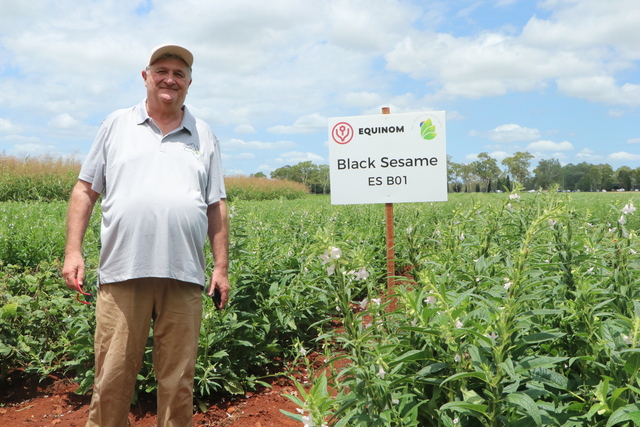
Farmers got an in-depth look at a range of white and black sesame varieties by Israeli seed developer Equinom and US firm Sesaco, which have both developed ’non-shattering’ versions of the traditional sesame plant and which the Queensland Government’s Department of Primary Industries has been trialling on Australian paddocks since 2017.
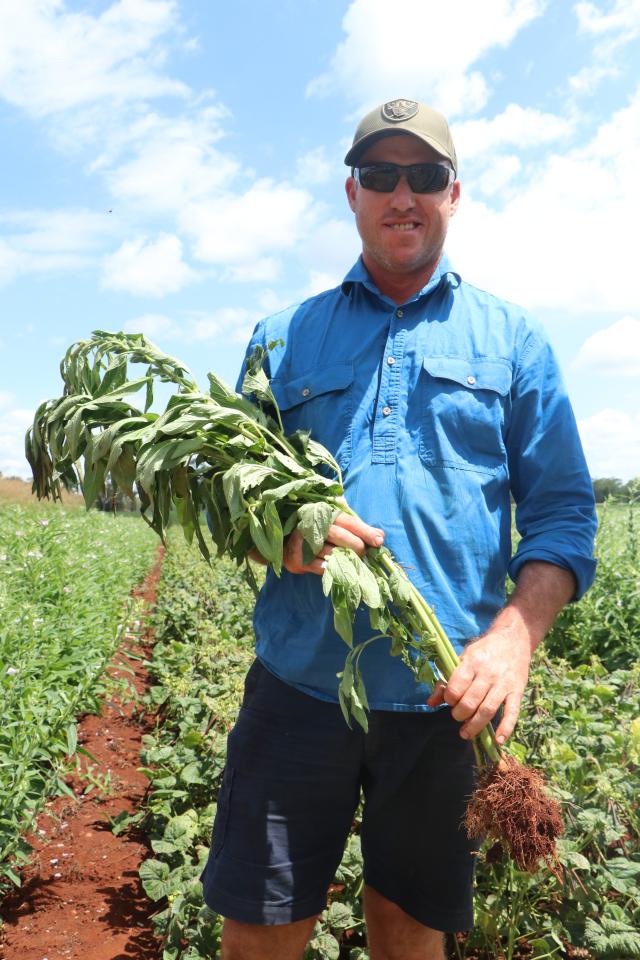
Andrew McDonald, a manager for Australian seed tech company AgriVentis, explained to the crowd that ’normal’ sesame plants must be harvested by hand, as the plant will discharge its seeds when disturbed – meaning it must be harvested carefully by hand to avoid waste.
’Non-shattering’ varieties, instead, retain the sesame seeds inside their pods, allowing a header to harvest the plants without issue; this also means the seeds are not exposed to the elements before harvest time allowing the potential yield to be higher.
Rod O’Connor, a development officer for the Department of Primary Industries, said the change in the sesame plant’s makeup means Australia has the potential to emerge as an industry leader in locally-grown, machine-harvested sesame.
“The big reason Australia has a great opportunity in this market is that, currently, 90 per cent of sesame is hand-harvested,“ Mr O’Connor explained.
“Australian farmers are so innovative and good at harvesting with machines that we can produce crops really well.
“There’s a huge market here. Plenty Foods in Kingaroy, for instance, are really interested in it [for making sesame oil], because obviously you’d have the whole supply chain here [if local farmers grew sesame].“
Mr O’Connor added that, owing to the sesame plant’s hardy nature and quick growth – non-shattering varieties are harvest-ready within 100 to 170 days from planting – the crop makes for a solid ’opportunity’ option.
“As we’ve got changing climate conditions, we’re looking into alternative options that can fit into both our current and future industries,“ he explained.
“This and many of the other crops at the field day today are a great opportunity crops; this time of year in the Burnett you don’t have a lot of crop options.
“You could grow [sesame], harvest it and still be in time for the winter crop. If you miss, say, the planting window for sorghum, you could plant this stuff,“ he said.
Farmers at the field day were asked to consider ’buying in’ to the sesame craze, though some were critical about the prospects and viability of the crop.
From their questions, they learned the sesame plant requires an investment of fertiliser, can struggle with too much rainfall, and cattle as well as other livestock are not interested in grazing on the plant’s stubble left after harvest.
However, the sesame plant also presents a number of upsides: it allegedly controls nematodes in the soil, blocks out weeds on the paddock and is not strongly affected by drought.
Daniel Weinstock, the chair of the Australian Sesame Industry Development Association, was present at the field day and urged farmers to consider sesame as a summer cropping option.
Mr Weinstock said local interest had the potential to replace around 10,000 tonnes of sesame imported to Australia each year, which is then used to make products like oils and tahini, a Middle-Eastern condiment.
With the help of Burnett farmers, Mr Weinstock said his organisation wants to see the Australian sesame industry grow to up to 400,000 hectares – making it a strong player in the six million-tonne annual sesame market.