
They may be small, but their impact is massive.
Cattle ticks, known for transmitting the deadly tick fever, can spell disaster for a herd.
Tick season commonly begins after the first rain in spring, or late winter in warmer areas, and runs through to autumn and early winter.
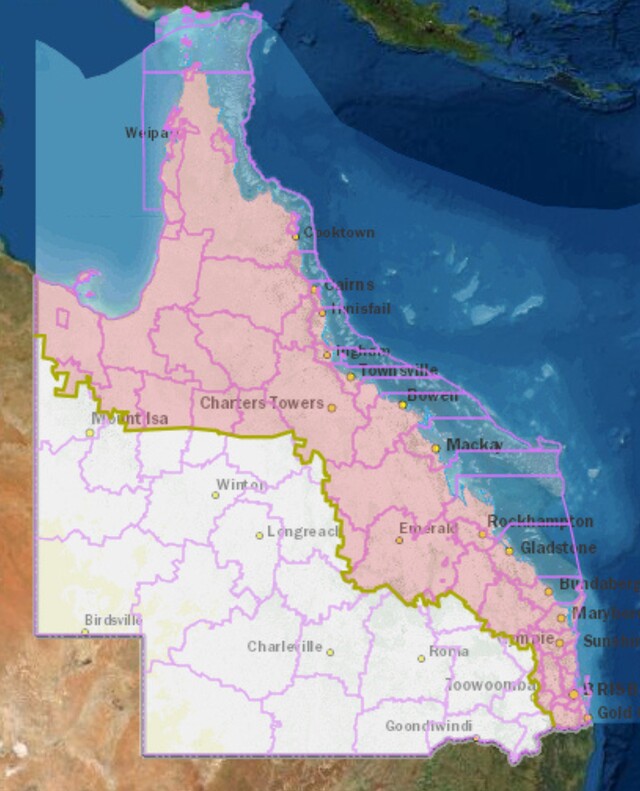
The South Burnett region is a combination of ‘clean’ (tick free) and ‘dirty’ (tick infested) areas, with outbreaks within ‘clean’ areas in recent times.
Raising awareness of ticks helps new producers to identify cattle ticks, tick boundaries as well as the appropriate treatment when cattle ticks are observed on cattle.
There are numerous small lifestyle properties where the owners may be new to agriculture, and unaware of what a cattle tick looks like and the regulations around the control of cattle ticks and movement of cattle across tick boundaries.
The life cycle of a tick averages 21 days, with female ticks feeding on blood for seven to 12 days and reaching adulthood at around 21 days.
Once they reach 4mm-5mm long, the ticks gorge themselves on blood overnight before dropping to the ground the following morning.
Within a few days, the females begin laying, with each female tick capable of laying up to 2,500 eggs before dying.
“It’s important that a planned approach to tick control is followed to make sure treatment is as effective as possible,” the Kewpie team said.
During a heavy infestation, ticks can be found all over the animal, but ticks will generally be found in the area where the lower part of the neck joins the chest between the front legs, the ears, behind elbows, the navel, between the hind legs and the base of the tail.
It’s the protected areas with softer skin they are most commonly found.
To identify cattle that have been bitten by ticks, cattle owners should notice if the beast has developed a rough coat, as a loss of condition, listlessness and unexpected deaths are indicators of tick bites.
Bites from cattle ticks can cause ill thrift, where the beast is not sick, but not thriving, a loss of production as well as possible death.
Tick-fever, one of the many tick-bourne diseases, can lead to the death of an animal, and will require veterinarian assistance to treat.
Treating ticks is important for cattle owners to maintain market access, to prevent spread to neighbouring properties and accidental spread to clean areas, and to maintain the health and performance of cattle, preventing death due to tick borne parasites.
This year’s tick season can be perceived to be worse than previous years, due to the spread of ticks from the previous seasons into clean areas, but any season that experiences heat and moisture is conducive to increased tick numbers.
There are many factors that can come together and influence the strength of tick season, with weather conditions high on the list. Mild winters followed by hot, moist conditions in spring are ideal for ticks.
Missing the last treatment before winter, as well as producers being unaware of a tick problem and missing the opportunity to treat the cattle when ticks first infest a property are factors too. Cattle straying onto a clean property from infested neighboring properties is another factor to consider.
Treating ticks with products that are no longer effective, or applied incorrectly or at the incorrect rate for the weight of the cattle, and the inability to treat all cattle by not achieving a clean muster can affect the strength of tick season.
“Missing just one animal could be all it takes,” the Kewpie team said.
To treat ticks, treatment is dependent on each producer’s individual set of circumstances and preferences.
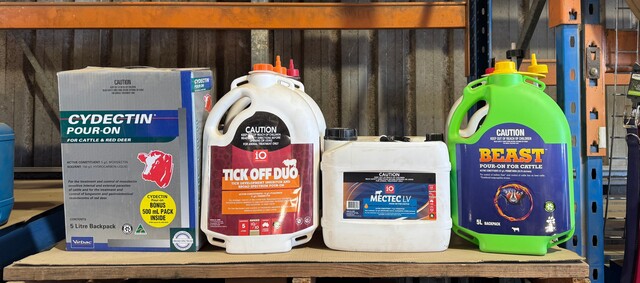
Treatments can range from chemical dips, sprays, pour-on or injectable treatments, repeated within a specific timeframe.
Kewpie Stockfeeds stocks a variety of products to meet farmer needs, including the methods listed above, as well as long and short term acting, with pour-on treatments that include dual action with worm control. Their range of products can treat and prevent cattle tick numbers from having an impact on cattle production and access to clean markets, with the sales staff knowledgeable on how to use them.
More information about tick control can be found by contacting the Department of Primary Industries.