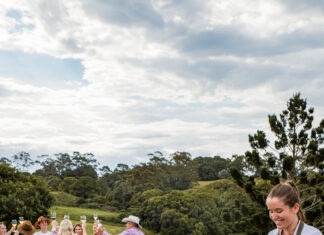
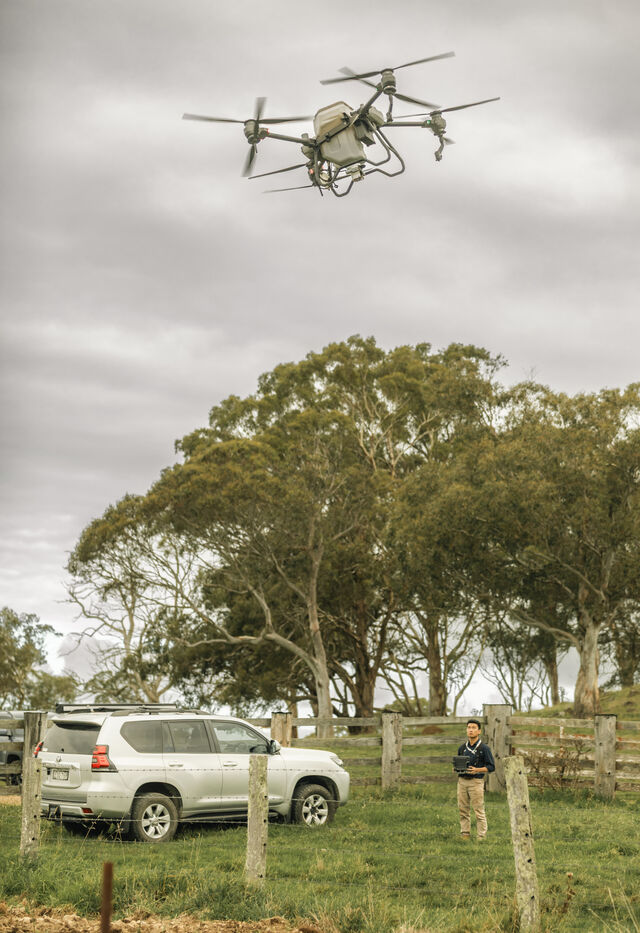
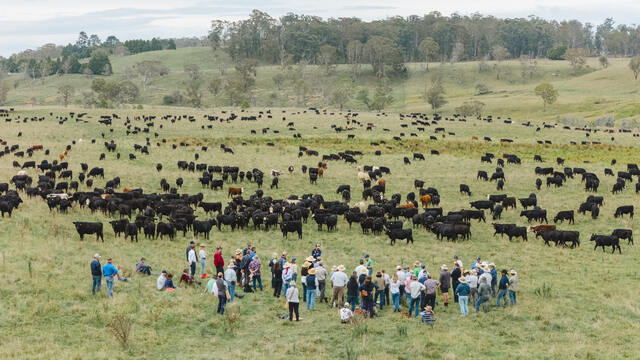
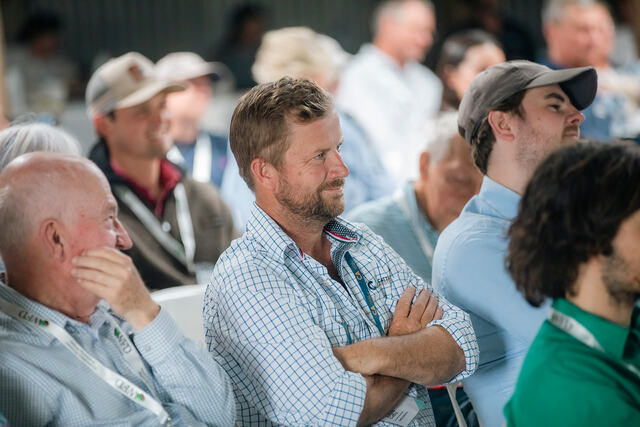
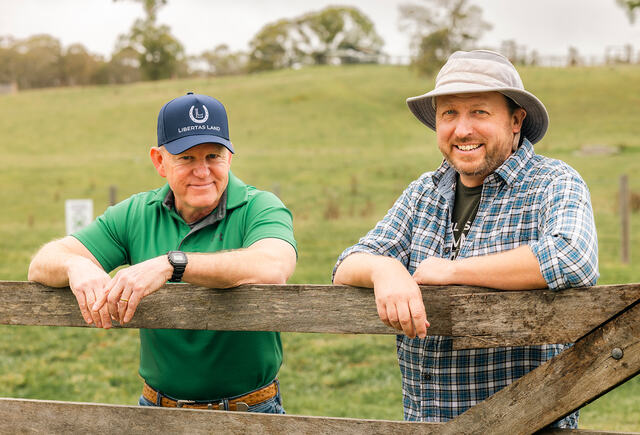
As the sun rose over rolling pastures at Hernani in northern NSW last month, hundreds of farmers, scientists and industry leaders gathered with a shared purpose, to explore how agriculture might evolve to meet the challenges of the future.
The eighth annual Wilmot Field Day, hosted at Wilmot Cattle Co, has become one of Australia’s most influential gatherings focused on regenerative agriculture and natural capital.
Organised by Macdoch Australia and Impact Ag Australia, this year’s sell-out event attracted 356 participants from across the country and overseas.
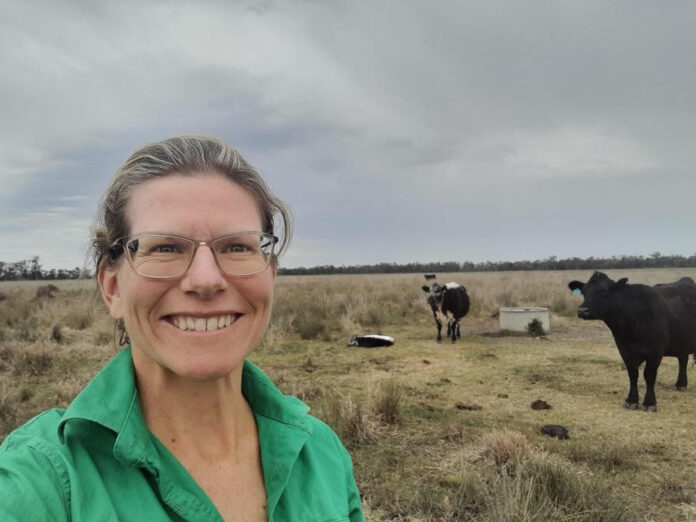
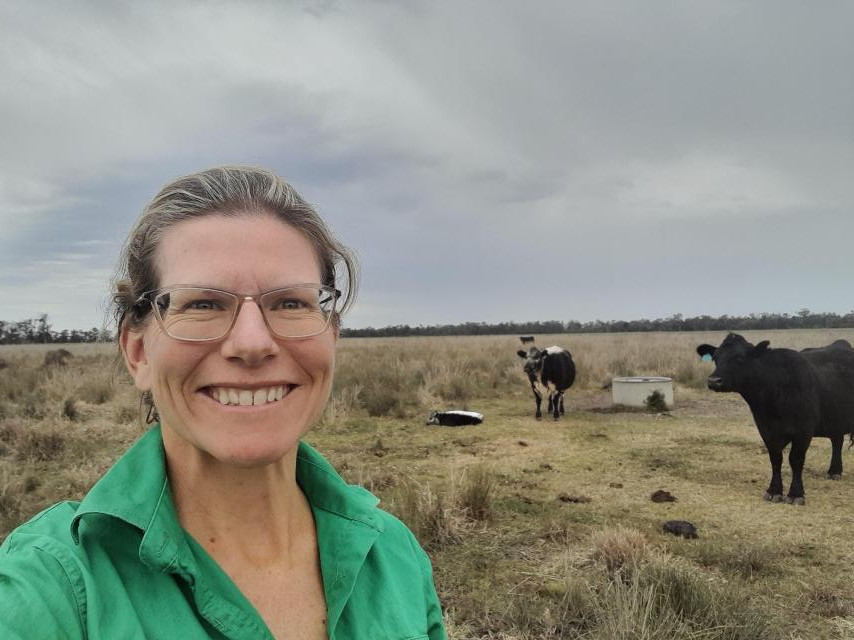
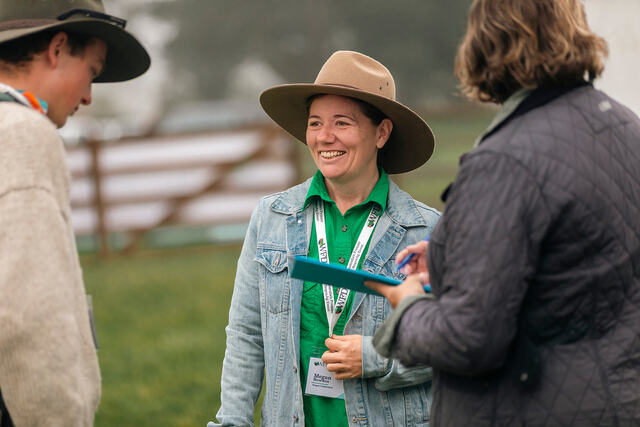
For Pippa Jones, a farmer and agricultural advisor from Goondiwindi attending for the first time, the experience was both inspiring and practical.
“I loved the beginning with Allen Williams (a sixth-generation rancher and soil scientist from the United States) when he framed the idea that we don’t need a strict definition of regenerative, but instead should focus on restoration,” Ms Jones said.
“I thought that was a beautiful way to start.”
The two-day forum has built a reputation as a space where farmers lead the conversation about land stewardship, soil health and farm profitability.
Nearly 30 per cent of attendees this year were livestock producers, while more than one-third were already running – or seriously considering – soil carbon projects.
Participants travelled from every Australian state, joined by international visitors from the United States, the United Kingdom and Europe, highlighting the growing global interest in Australian approaches to regenerative agriculture.
Among the keynote speakers was Allen Williams. His presentation drew on extensive research comparing conventional grazing systems with biologically focused grazing management.
The findings were striking.
Grazing systems designed to rely more heavily on soil biology allowed more than twice as much rainfall to infiltrate the soil compared with neighbouring conventional systems.
Across 120 farms transitioning management systems, soil aggregation depth improved dramatically – from around five centimetres to more than 37cm – while plant diversity and fungal activity increased significantly.
For farmers facing increasingly volatile fertiliser and fuel markets, the research suggested soil biology could play a much larger role in long-term resilience.
For Ms Jones, the balance between scientific research and practical farming knowledge was a standout feature of the event.
“I loved the way the speakers combined science with practical farming experience,” she said.
Another highlight came from Jonathan Lundgren, founder of the global 1000 Farms Initiative, one of the largest ecological and economic studies of farming systems in the world.
The project has now assessed more than 1700 farms across multiple countries, analysing roughly 500 data points on each property – including soil carbon, biodiversity, crop nutrient density and farm economics.
“We wanted to put some legitimacy around regenerative, to evaluate what it is and use science to clarify some of the claims,” Dr Lundgren told the audience.
One of the strongest patterns emerging from the research is the role biodiversity plays in driving regenerative outcomes. According to the data, biodiversity influences soil carbon levels, water cycling, ecosystem health and overall farm productivity.
Regenerative farms within the dataset are showing equal or better yields than conventional operations, alongside stronger net profitability. Soil carbon levels are also around 50 per cent higher in fully regenerative systems when measured to 60 centimetres depth.
Perhaps most surprising, Dr Lundgren said, was the human impact of the research itself.
“When I started the 1000 Farms Initiative, I thought the most important output would be the data,” he said.
“But something else emerged that I didn’t expect, the project makes farmers feel seen and heard.”
The event also explored how farmers measure and manage emissions on-farm, a topic Ms Jones found particularly engaging.
“I particularly enjoyed the panel on emissions on farm, how we measure them and why data matters,” she said.
For many producers, data collection is becoming increasingly important, whether to understand soil health, track carbon sequestration or improve grazing management.
Ms Jones said one practical idea she plans to take home involves thinking more strategically about water distribution within rotational grazing systems.
“It’s something I’d subconsciously thought about before, but hadn’t properly considered,” she said.
“The data really helps with that.”
The event also reinforced a broader message about innovation in agriculture: change does not have to happen all at once.
“And I loved the messaging around just starting – start small, be open-minded and think about how you can do things differently,” Ms Jones said.
“Start collecting data, even if you start small. Having data is really important.”
For farmers navigating new ideas, shifting practices and uncertain markets, that approach can be easier said than done.
“It sounds easy, but in reality it can be hard to suddenly start doing,” she said.
“So the advice is simple: just start somewhere.”
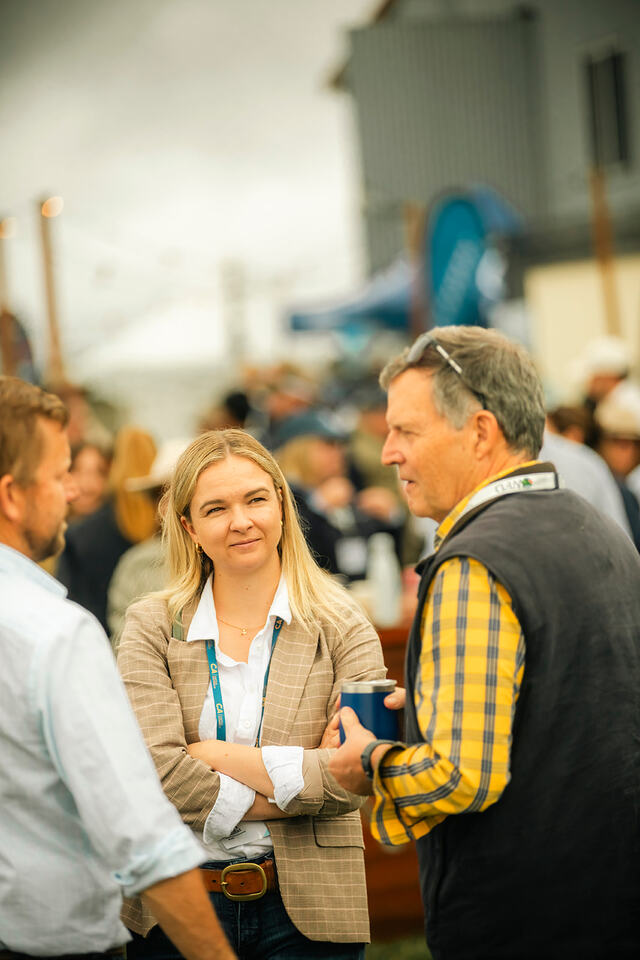
Beyond the presentations, the field day also served as a powerful networking opportunity.
“You get so much out of it,” Ms Jones said.
“And the networking – I hate that word – but the people you meet, the new connections and the chance to reconnect with old friends, that’s a big part of it too.”
The international perspective added another layer of insight.
“The context may be different around the world, but the principles are remarkably similar,” Ms Jones said.
“We’re actually not that different after all.”
Those conversations are increasingly important as the global agriculture sector grapples with climate pressures, biodiversity loss and rising production costs.
Hugh Killen, chief executive officer of Impact Ag Australia, said the discussions at Wilmot highlighted a broader shift underway across the sector.
“One of the uncomfortable truths raised at Wilmot is that many of the metrics we’ve used to define success in agriculture – more land, more inputs, bigger machinery – may no longer be working for family farms,” Mr Killen said.
“What we’re seeing emerge is not just a new set of practices, but a redesign of how value flows through land, supply chains and ultimately family farm businesses.”
Global investment in nature-based markets is also accelerating, he added.
“Despite the rhetoric, money is still flowing into nature and decarbonisation,” Mr Killen said.
“The question for Australia is whether we choose to lead that shift, or watch the opportunity move offshore.”
For Ms Jones, however, the biggest takeaway from Wilmot was far simpler and deeply personal.
“I think the biggest message is just to keep going,” she said.
“Sometimes when things get hard, it helps to look backwards and see what you’ve already achieved.
“That reminds you that you’re moving in the right direction.”
And after her first visit to the Wilmot Field Day, she has little doubt about returning.
“As a first-timer, I would absolutely come back,” she said.
“You get so much out of it.”