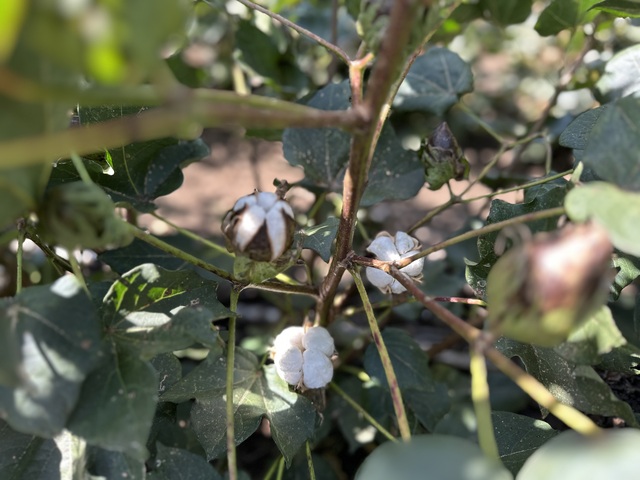

Most central Queensland cotton growers are “growing on” their crops this season hoping to significantly lift yields after recent rain and improved water allocations.
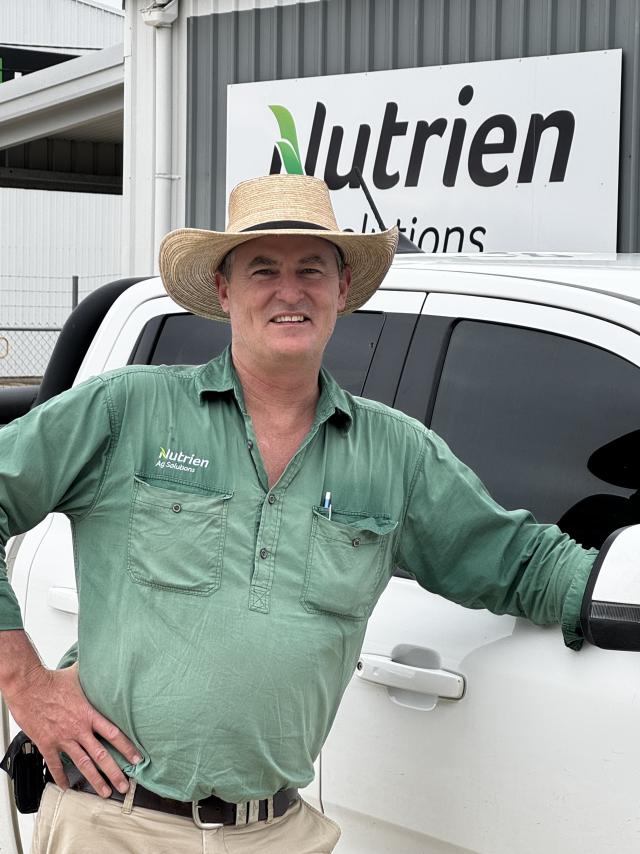
Emerald-based Nutrien agronomist Will Woolcock said only a small portion of the region’s cotton area was currently being harvested, with most producers opting to extend the season after a challenging start marked by limited irrigation water.
“It’s a very small percentage of cotton farmers who decided to pick their 2025/26 cotton crop,” Mr Woolcock said.
“Most cotton farmers have grown that crop on.”
The season began under tight water conditions, with many growers entering planting with zero allocation and relying only on small carry-over volumes from the previous year.
Dam levels sat at about 23 per cent at the start of the season, forcing many producers to plant what is commonly referred to as “walk-away cotton” – crops given minimal irrigation and then left to rely largely on rainfall.
However, steady rainfall through December and January, followed by further late-January falls, triggered inflows that lifted dam storage to around 27.5 per cent and allowed water allocations to open.
The improved outlook prompted growers to recommit to their crops, pumping additional water and pushing for higher yields.
Leading into the rain, expected production on many dry-leaning fields was estimated at between four and six bales per hectare. With water now available and the season still running, optimism has strengthened considerably.
“Now that we’ve got this water and we’ve got the season still to run, we’re hoping – most people are feeling positive – that we’ll get into double digits,” Mr Woolcock said.
He said growers who committed their lower water allocations to a smaller area had achieved those figures and were aiming even higher by extending crop maturity.
Central Queensland’s climate is also working in producers’ favour.
Unlike southern cotton regions, where frost risk often dictates firm seasonal cut-off dates, central Queensland growers typically face less frost pressure, allowing crops to develop longer into late autumn before defoliation.
While uncertainty remains, Mr Woolcock said sentiment had shifted dramatically since before Christmas.
“It’s not all doom and gloom. Compared to where we were probably pre-Christmas to now, there’s a lot of hope,” he said.
He added that resilience remained one of the industry’s defining strengths, with growers adapting quickly to changing seasonal conditions in pursuit of improved returns.