Cancer and Covid-19 patients whose sense of taste has been disturbed are finding relief from a berry that makes sour, acidic and bitter-tasting consumables taste sweet.
Miracle fruit freeze-dried cubes transform the taste of food, changing the lives of people suffering from dysgeusia, which alters the tounge’s receptors.
Synsepalum dulcificum (miracle fruit) contains miraculin, a taste-modifying protein, that binds the sweet receptors on the tongue, making food such as lemon taste like lemonade.
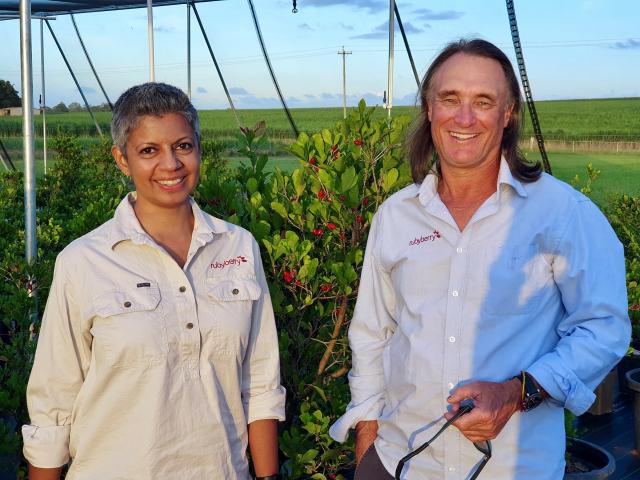
Queenslanders Chris Beckwith and Karen Pereira, who are the first in Australia to grow the fruit, are passionate about its positive values for people struggling to eat.
“It’s a subject close to our hearts,“ Mr Beckwith said. “It’s heart-breaking to watch someone who has cared for you for so long become ill and unable to enjoy simple things like sharing a meal. We felt helpless.
“Helping others is what drives us to further understand Miracle fruit and how it can assist those affected by dysgeusia and other chronic illnesses.
“In 2013 we left our careers in advertising and moved from Sydney to the Daintree Rainforest to start a mangosteen farm growing the Miracle fruit trees and haven’t looked back since.”
During a Covid lockdown in 2020, Rubyberry farm relocated to Childers, which offered a more favourable growing and manufacturing environment with space to grow.
“We hope to start producing small runs of freeze-dried Miracle fruit cubes from our 3000 trees within two years,” Mr Beckwith said.
Rubyberry Miracle Fruit imports from the only United States farm in the world supplying hospitals such as the Miami Cancer Institute.
Mr Beckwith said this gave many Australian healthcare professionals confidence to contact their international counterparts to learn more.
“Without this link, Rubyberry Miracle Fruit’s mission would be harder to achieve, he said.”
Dr Andrew Martin, who is a general surgeon from Cessnock in NSW, said the fruit provided “sweet relief” for those suffering and helped alleviate the burden and pain of illnesses.
“When people are sick, nutrition is more important than ever,” he said. “But when taste is disturbed by illness or treatment, it makes eating and tasting everyday foods unpalatable.
“I have a number of patients who have lost their taste due to various cancer treatments, radiation and chemotherapy. They struggle with nausea or can no longer taste food, which severely impacts their health and quality of life.”
Lee-Ann Mundy, an accredited practising dietician working in oncology in northwest Tasmania, said it was incredible to see the positive impact the Miracle fruit had on her patients.
“The significant therapeutic opportunity for Rubyberry is so critical as a health professional – many patients and clients undergoing cancer treatment often lose their taste and it can affect their appetite,” she said.
“The knock-on effect from this is difficulties keeping hydrated and well-nourished, which is paramount during their treatment and recovery.
“Anything that helps me as a clinician to offer strategies for disgeusia is welcome and I believe this product is part of the answer that will make a huge difference to the way we support our patients to eat well and enjoy eating.”
Miracle fruit is an ancient fruit that is highly perishable and stays fresh for just one to two days.
Rubyberry Miracle fruit cubes are stocked in more than 25 pharmacies across Australia.
* For more information please visit www.rubyberry.com
Rubyberry Miracle Fruit Farm’s Production Hurdles
* Miracle Fruit is labour-intensive farming
* The fruit can only be picked by hand
* In the tropics, Chris and Karen experienced heavy rains annually. These would knock the flowers from trees and cause fruit to split.
* The lack of sunlight would slow the development of the flowers forming.
* Chris and Karen moved the Daintree farm south to Childers from a tropical to a sub-tropical environment and the trees are adapting well.
* The environment is better suited to freeze-drying, the only way to preserve the highly-perishable glycoprotein Miraculin.
* Farms in Africa claim 25 kilograms of fresh Miracle fruit produces one kilogram when freeze dried.