
More than half (54 per cent) of Darling Downs-based producers expect conditions in the agricultural economy to worsen due to dry seasonal conditions, according to Rabobank.
In its latest Rural Confidence survey, the agribusiness specialist found sentiment in the state’s rural sector had decreased to -32pc (from -13pc last quarter), with significantly more producers now expecting the agricultural economy to worsen in the next 12 months.
In all, 40pc of Queensland farmers surveyed expect conditions to remain stable.
The state’s cotton sector is a “bright spot” though, with most cotton growers expecting business conditions to improve or remain unchanged in the year ahead.
Grain, beef and sugar producers all showed declining optimism.
Falling commodity prices remain the chief concern of those Queensland producers expecting the agricultural economy to worsen, nominated by 43pc surveyed.
Higher interest rates are continuing to weigh on producers’ minds, while concern about high input costs increased slightly.
For the Queensland primary producers expecting the agricultural economy to improve, 18pc said they thought business conditions could not get worse, while commodity prices caused optimism for 63pc this quarter.
Rabobank regional manager for North Queensland and the Northern Territory Trent McIndoe said while much of northern and western Queensland was experiencing typical seasonal conditions, producers expected an El Nino weather system.
“Much of the state has enjoyed a run of reasonable seasons in the past three years, meaning pastures are in good, to fair condition in most areas, with parts of the state’s north and west receiving useful unseasonal rain in recent months,” he said.
“But, the chance of a change in this seasonal outlook, coupled with the downward shift in commodity prices, is a concern for producers.”
The state’s cotton growers maintain their positive outlook from the previous quarter, with the majority surveyed (92pc) reporting an expectation that agricultural economic conditions will improve in the next 12 months.
“Cotton, contrary to the majority of agricultural commodities, has welcomed price improvements in markets in recent months,“ Mr McIndoe said.
“Prices have been able to climb above the levels they had been trading at – relatively rangebound – throughout the first half of
2023.“
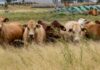
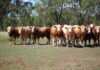
The number of Queensland beef producers expecting business conditions to decline in the year ahead has jumped from 33pc last quarter to 45pc this survey, with 15pc anticipating an improvement (albeit up from nine per cent with that view last quarter).
Mr McIndoe said the state’s beef producers’ chief concerns were softening commodity prices and dry seasonal conditions.
The survey revealed confidence had also fallen among the state’s grain growers, with 40pc now believing economic conditions would decline in the year ahead.
Mr McIndoe said the record harvests seen in the previous two years were not expected.
“Conditions in southern Queensland grain-producing areas are a mixed bag, with spring rain much needed right across the growing area,” he said.
“And, the condition of Western Downs crops is also mixed, depending on the fallow period, the cover crop used and amount of ground cover that has helped retain soil moisture in some paddocks, as opposed to double-cropped areas, which are drier.”
Mr McIndoe said wheat crop yields of up to 2.5 tonnes per hectare may be achievable “in the good patches”, with the balance expected to yield 1.25 to 1.5 tonnes per hectare in southern grain growing areas.
“However, some crops are already being fed off or bailed with no prospect of harvesting grain due to minimal rainfall over the winter months,” he said.
“There is still time on the Darling Downs though – any rainfall received in the next few weeks will assist to bridge the moisture gap and fill grain, however, forecasts aren’t looking favourable in the short term.”
Fewer Queensland producers expect to use debt to buy property (15pc this quarter, down from 24pc previously).
“The number of Queensland agricultural properties on the market has eased back from the volumes seen in recent years,” Mr McIndoe said.
“And, interest rates are more of a consideration now when producers are looking at buying land. Interest rates, combined with the seasonal outlook and softer commodity prices, are being factored into expansion plans.”
The Rabobank Rural Confidence Survey questions some 1000 primary producers across a range of commodities and geographical areas throughout Australia each quarter.
It is the most robust study of its type in Australia and has been done since 2000 by an independent research organisation.
Fact box
■ Queensland rural sentiment has declined in the latest quarter.
■ Cotton producers are the only commodity sector reporting an optimistic outlook on
the year ahead.
■ More of the state’s farmers are looking to decrease investment.