Come rain or shine, Australia’s producers are always hard at work, cultivating and harvesting products to support the country’s domestic markets.
But, with climate change and the country’s shifting weather patterns, there is an urgent need to protect our producers and food supply chains from inclement conditions.
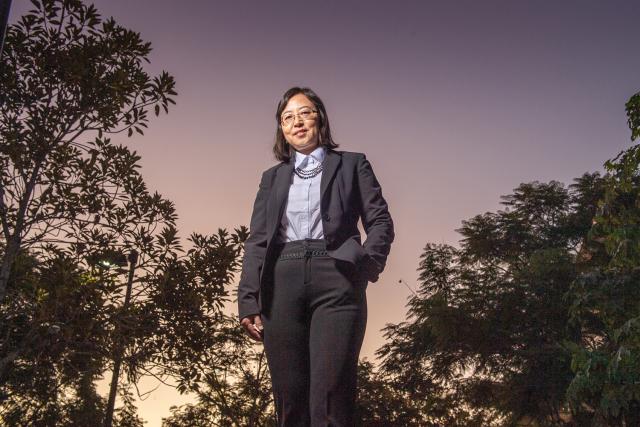
This will be the focus of University of Southern Queensland’s Dr Jenny Wang, who has been awarded a $431,000 Australian Research Council ECR industry fellowship to help lead a team in customising the country’s weather index insurance offerings.
The project is a partnership between the University and climate risk insurtech company CelsiusPro.
“The use of weather index insurance is fast becoming a staple in agricultural production and research like this will help to provide a much-needed scientific footprint,” CelsiusPro CEO Jonathan Barratt said.
Weather index insurance (WII), which provides agribusinesses with coverage against weather-related risks, is an increasingly important strategy to mitigate loss, however, more can be done increase its uptake, says Dr Wang.
Currently, WII policies use data from local weather stations, providing a payout when the weather parameter moves beyond a pre-specified point.
“Because of the placement of the weather stations, these parameters often cover large areas,” Dr Wang said.
“If you live close to the weather station, the parameters can be quite accurate.
“But, if you move further away, these parameters become less precise, which leads some to forgo purchasing the product, which is a phenomenon known as spatial basis risk.
“The purpose of our project is to overcome this key disadvantage and help satisfy changing demand.”
To do this, Dr Wang will use a multi-pronged approach to help customise the WII system.
Alongside a team of scientists and industry experts, Dr Wang aims to identify a machine learning algorithm that can detect drought events using satellite image data.
And, then use this to develop location-specific drought indicators, which can be used to provide more accurate WII coverage.
This project is based on her previous work, where she observed the advantages and limitations of WII uptake in developing countries.
“In the future, with climate change going the way it is, we expect extreme weather events to occur more frequently,” Dr Wang said.
“If farmers don’t purchase this insurance and they are not protected against weather-related loss, an extreme weather event will impact not only their income and yield for that year, but also the years following.
“If we can create better-tailored products, which also speeds up the payout process, we can support them to continue their practices, which ultimately protects the country’s food supply.”
Dr Wang said she was thrilled to have received one of the coveted Australian Research Council ECR industry fellowships, which has an overall success rate less than 14 per cent.
“This definitely was a big surprise and I’m very excited,” she said.
“While there are some challenges in the progress of the project, I will take advantage of this excellent opportunity, working together with our industry partners and other researchers to help improve the WII design to meet specific demands of Australian farmers and agribusinesses.”