AgriFutures Australia will invest $2 million into a new five-year national program of research to scale-up production of the high-value sesame crop.
With the rapidly growing global market predicted to hit $26 billion by 2025 – and 100 per cent of sesame consumed in Australia imported from overseas – the research and development (R&D) investment is designed to capitalise on the opportunity and boost the output of the emerging local industry.
AgriFutures Australia Emerging Industries program manager Dr Olivia Reynolds said the applied research approach would address practical challenges that included crop agronomy for maximum yield, customising machinery for planting and harvest specifications, as well as post-harvest processing.
“In supporting the industry to scale-up production, it’s essential that farmers have the tools available to them so that sesame can fit within existing broadacre cropping systems,” Dr Reynolds said.
“We see a strong future for sesame in Australia with research to date demonstrating its suitability to a range of environments and its ability to perform under extreme climatic conditions, as well as that at $2000 a tonne at farmgate it is an attractive commercial proposition.”
AgriFutures Australia is dedicated to growing the future of Australian agriculture and long-term prosperity of rural industries through investing in research, innovation and leadership development.
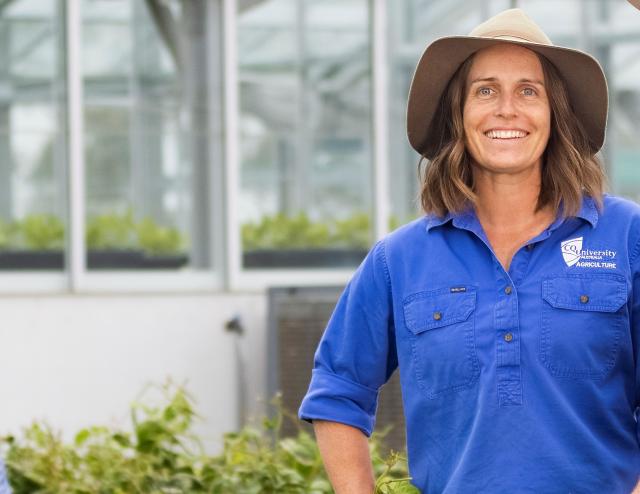
Alongside farmers from across the country, the Central Queensland University Australia (CQU) will lead the national program of research, in collaboration with universities, State and territory governments, commercial seed companies, farm machinery and seed processing businesses.
Research will address six themes:
* Crop protection – to understand the diseases and weeds of sesame and their management and then extend this knowledge to industry.
* Nutrient, irrigation and water management – to understand and extend to industry nutrient cycling under different water and nitrogen regimes.
* Farming systems and modelling – to inform the adoption of sesame crops into existing Australian farming systems.
* Southern production – to assess and articulate the adaptability of growing sesame in southern Australian farming regions (southern QLD, north and south NSW).
* Crop establishment and harvesting mechanisation – to develop optimised planting and harvesting guidelines for sesame production in Australian farming systems and provide this to industry.
* Post-harvest seed storage and harvesting – to optimise seed storage and harvesting capability for industry.
Over the past five years, CQU has led a series of sesame research activities, with the AgriFutures program to link with work underway through the Cooperative Research Centre for Developing Northern Australia (CRCNA) for a comprehensive national approach.
CQU research leader Dr Tieneke Trotter said the industry had now overcome many of its early challenges in gaining a foothold in Australia, with international seed companies now investing in developing a new production base.
“Sesame has traditionally been grown in tropical and sub-tropical environments but, as part of our research, we will be investigating new genetic lines with a shorter growing season to expand the crop’s footprint into southern Australia,” Dr Trotter said.
“The new varieties that are coming through are non-shattering, which means harvest equipment should be able to capture more seed and more value for the farmer.”
Different sesame varieties produce either black or white seed, which can be sold as seed for human or animal consumption or processed into oil, paste (tahini) or flour.
They are also used as a flavouring in confectionary.
Dr Reynolds said that with such diverse uses, it was important that the research consortium brought together players from all sections of the value chain.
“The collaborative program of research brings together the Australian Sesame Industry Development Association (ASIDA), growers, researchers, seed suppliers and seed processors, to carry out the research and solutions that will be practical in real world conditions.“