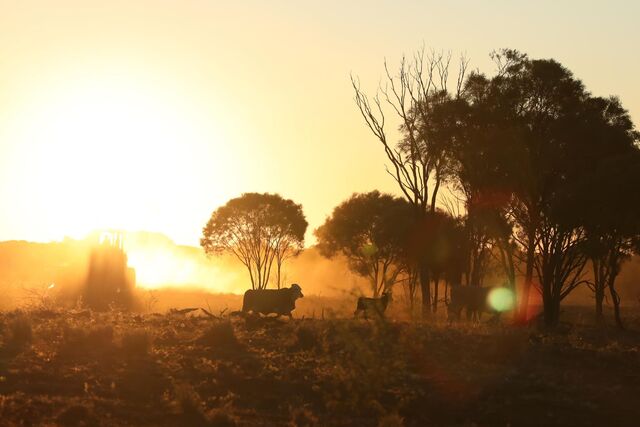
A picture-perfect herd of mixed-breed cattle grazing the native grass among the Gidgee trees of “Mokana“ south of Hughenden signifies the start of a couple’s future in Queensland’s beef industry.
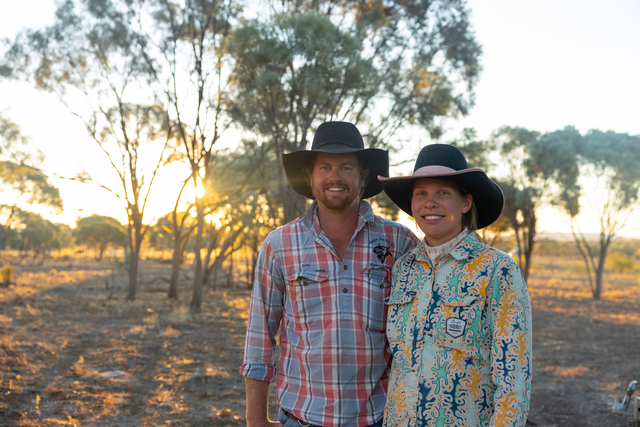
Generational graziers Sam and Julia Burge have been involved in their parent’s beef operations from a young age but are now forging their own successful path.
In 2023, they used a QRIDA First Start Loan to buy 200 head of pregnancy tested in-calf (PTIC) heifers to join their existing 323 head of cattle, slowly building their numbers to create a viable beef operation.
“We have a mixture of breeds,“ Julia said. “Our original herd consists of Brahman-cross while our newer breeders are Brangus.“
Julia says while they prefer Brahman “as we were both raised around this breed of cattle“ they recently opted to buy Brangus for their new line of breeders to allow them access to a different sale market.
“Both breeds have their pros and cons when it comes to breeding and sale day.
“There are always going to be challenges when it comes to having a beef operation but the forever fluctuating cattle market keeps us on our toes and is probably our biggest challenge.
“It isn’t necessarily an issue any of us will overcome as such but more one that we are continuously assessing and working through to maximize our businesses operation.“
“Mokana“, where Sam and Julia agist their cattle, has a diverse range of country, including spinifex ridges, buffel grass creeks and gullies, as well as black soil flats.
The couple often reminisces about growing up in their own family’s beef operations, which has fuelled their passion – and lay the foundation – for creating their own beef business.
“My family own a big company, Burge Grazing, so we’ve just gone off that pretty much and done our own thing off the side of that. I love it, there’s nothing else I’d do, it’s a good job,” says Sam.
“I grew up around Richmond with my family just being off the land as well, I guess it’s just a passion of ours and all we know,” adds Julia.
The low interest rates and interest-only periods were attractive features of the First Start Loan for Sam and Julia and made it more accessible than other financial support.
“We definitely couldn’t have done it off our own back. Being a young family it would have just been too hard, too much.
The First Start Loan has definitely given us the lift that we need.
“There’s all that fun stuff like paperwork but you get through it all. It is a drawn-out process but I think you get that anywhere you go for loaning money,“ adds Sam.
“My advice would be do your research before you go in and just ring up and have a yarn. It’s not going to be easy, it could take a while but you’ll succeed in the end hopefully if you try hard enough.“
Julia says it was great to have local support from their regional area manager for the North West and Gulf, Sam Fryer, to answer their questions about the application process.
“Sam Fryer was a great help and guided us along the way in the right directions that we needed. He told us openly and honestly what we had to provide QRIDA to get the First Start Loan,” she says.
QRIDA’s First Start Loan offers up to $2 million to help producers purchase livestock to start their own farm business, purchase property, carry out family succession plans or enter into lease or share-farming arrangements.