A rare agribusiness opportunity in Queensland’s Border Rivers region is expected to draw offers around $100 million.
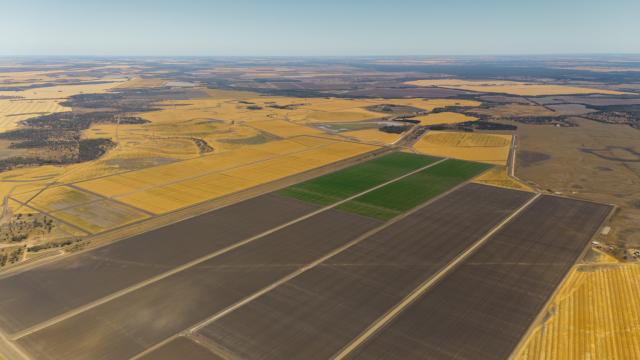
The Undabri and Yambocully aggregation in Goondiwindi features two distinct hubs owned by a private investment group. It is managed by Australian-owned and -operated rural asset management group Customised Farm Management.
The two holdings Undabri (10,444 hectares) and Yambocully (3475ha) share a border and cover 13,920ha.
They are being offered in one line or as separate assets, with a two-stage expressions of interest campaign.
JLL director – agribusiness Clayton Smith is managing the sale of the premium large-scale irrigated and dryland farming operation with Chris Holgar, senior director – Agribusiness and Geoff Warriner, senior director – Agribusiness.
Mr Smith said it provided a genuine opportunity to buy a large-scale aggregation of institutional scale or logical add-on for existing private operators on the doorstep of Goondiwindi.
“The tightly held Border Rivers region is considered to be one of the premier irrigated and dryland cropping regions in Australia,“ he said.
“It represents a mature agricultural investment landscape underpinned by a large institutional footprint, minimising peer risk.
“During the past decade, the aggregation has been thoughtfully developed to ensure reliability and productivity.
“Quality infrastructure supports every aspect of the aggregation, from pumping infrastructure through to accommodation.
“It’s a blue-chip asset with strong appeal to local, domestic and foreign buyers, noting there is potential to engage customised farm management beyond the sale.”
Substantial water assets support the irrigation areas and comprise 8399 megalitres of supplemented and unsupplemented water via the Yambocully Scheme (plus overland flow).
Entitlements allow more than 15,000 megalitres of annual irrigation water usage if available to pump and more than 10,500 megalitres can be stored on-farm.
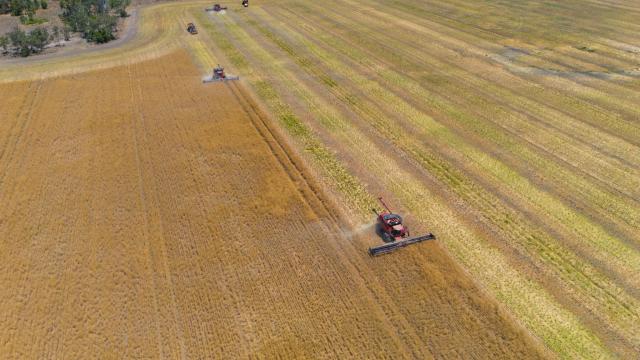
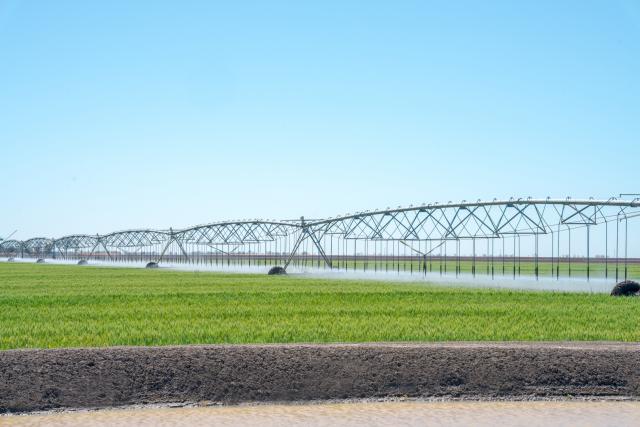
Extensive irrigation infrastructure has been developed and comprises a mixture of spray (both lateral and centre pivot) along with flood.
Significant areas of dryland farming exist on quality land soil types (some of which have recently been developed), which provide further scope to increase irrigation areas or continue as is.
Mr Holgar noted: “There are numerous end markets throughout the Border Rivers, including cotton gins, grains receival sites and feedlots.
“Topography is generally flat and soils are deep and fertile black self-mulching, cracking-clay loams typical on the vast flood plain, with areas originally timbered with Coolibah, Brigalow, Belah, Myall and well suited to a variety of summer crops including cotton and sorghum,” he said.
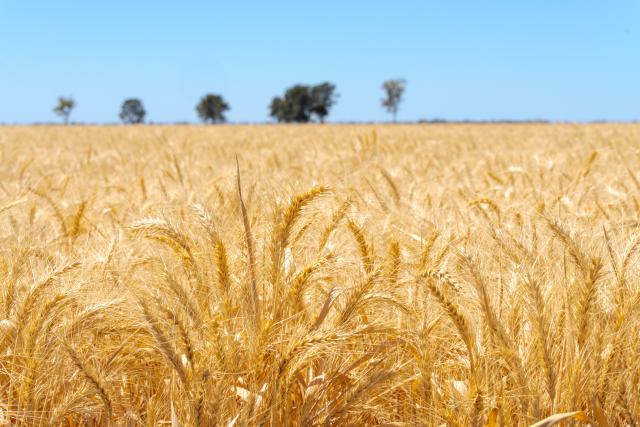
“Winter cereals, canola and chickpeas are also grown in the rotation.
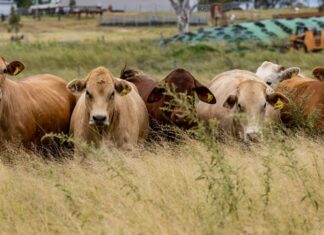
“The aggregation is supported by multiple residences, machinery sheds, storage sheds and elevated silos, as well as state-of-the-art livestock handling facilities.”
About the property
1700 hectares is irrigable with a further 8110ha of arable dryland farming.
Balance areas comprise grazing, infrastructure and support lands.
The aggregation is offered for sale on a going concern basis with inclusions (standing crop and plant and equipment) available.
Offers will also be considered for Undabri and Yambocully separately on a contingent basis.