
With International Women’s Day (IWD) held last month, research shows daughters are still widely overlooked in family business succession plans due to entrenched cultural attitudes among many fathers.
Despite progress towards equality being achieved in other areas of society, change is slow in family businesses and fewer than 10 per cent of daughters in Australia are appointed as business successors and heirs, according to Dr Leonnie Blumson, a social psychologist at the University of South Australia.
#CountHerIn was the theme of this year’s IWD, promoting gender equality through women’s economic inclusion, which is particularly relevant to family farms and businesses in Australia.
Sons are still given higher family status than wives and daughters when it comes to business, despite a growing field of research showing that women are equally competent business managers as men and, often, have better people skills and a more creative and innovative leadership style.
Dr Blumson says daughters often seek leadership positions outside of the family business due to an established family hierarchy where sons are favoured on biological sex and not necessarily merit.
“This has several implications, including potential drawbacks for the business losing a talented family member,“ she said.
“Excluding daughters and treating children unequally can also lead to family tensions and conflict that can harm relationships across several generations.”
Dr Blumson says despite sex discrimination laws and equal opportunity legislation – where daughters can legally contest employment decisions – many middle-aged businessmen remain socially conservative and prefer a structured hierarchy based on sex and age.
“There’s also an old-fashioned expectation that daughters will marry and change their name, focusing on family and child rearing rather than business.”
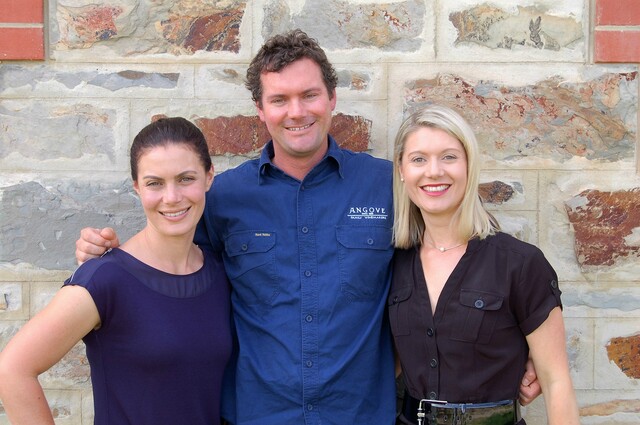
One well-known South Australian business bucking this trend is Angove Family Winemakers, a fifth-generation family-owned and operated winery and distillery.
Siblings Victoria and Richard Angove are joint managing directors of the company and sister Sophie also works in the historic vineyard as a viticulturist.
Victoria says her father John Angove brought a new approach to the company’s culture, leadership and recruitment strategy when he assumed the reins in 1983, hiring purely on merit.
“Growing up, the focus for Mum and Dad was on our education and we were treated equally,“ she said.
“There was never any question about gender-defined roles; it was all about a love for learning.
“Our family has always had a commitment to equality and opportunity and this underpins the company’s culture.”
Dr Blumson says female leaders generally place more weight on corporate social responsibilities – considering environmental, ethical, philanthropic and economic factors in their decision making.
“They are also associated with reducing fraud, being more innovative, building harmony in a team and resolving internal conflicts and improving employee welfare and satisfaction.
“It’s important that we address this gender economic inequality in family businesses. Business owners should be encouraged to include ALL interested children in the family business, tapping into the individual talents of sons and daughters.
“Family businesses should also be made aware that it is unlawful under the Sex Discrimination Act 1984 and the Equal Opportunity Legislation to discriminate against daughters on the basis of sex when employing children in the business.”