Get the latest news to your email inbox FREE!

REGISTER

Get the latest news to your email inbox FREE!

REGISTER
HomeNewsProducers urged to inspect cereal crops amid fall armyworm outbreak

Producers urged to inspect cereal crops amid fall armyworm outbreak

Dairy farmers and graziers are urged to inspect their crops amid fall armyworm (FAW) infestations in forage oats across southern-growing regions.

Reports of FAW impacting oats have surfaced from regions including the inner Downs, Southern Downs, Western Downs and Rolleston in central Queensland.

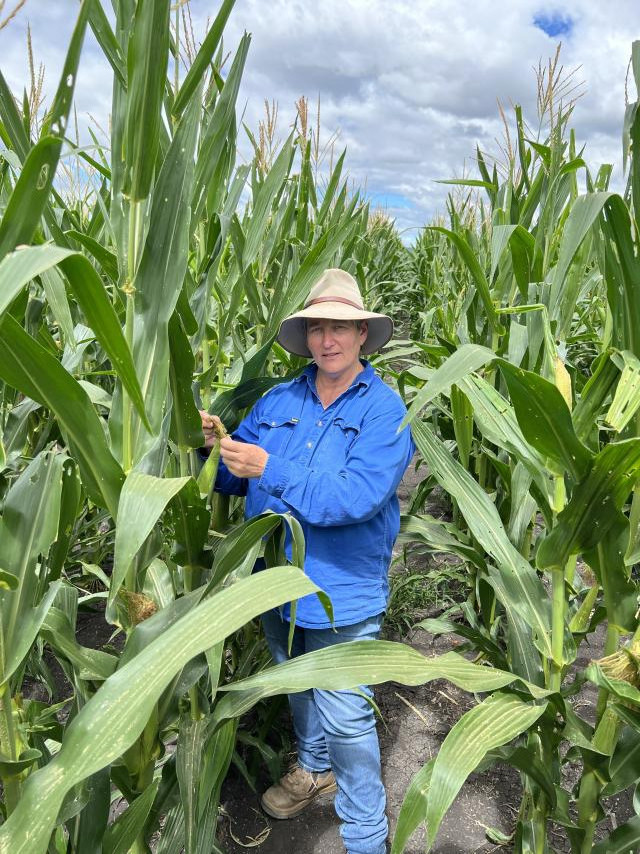
“Emerging and establishing crops are at greatest risk of complete defoliation and plant death,” Department of Agriculture and Fisheries principal entomologist Dr Melina Miles said.

“Growers and agronomists are encouraged to check crops for evidence of FAW within seven to 10 days of emergence.

“In oat–pasture mixes you may see damage to grasses and broadleaf pasture species when the FAW have consumed the oats and move as larger larvae.”

These infestations come at the end of the most severe season since the pest arrived in Australia in 2020.

If Queensland experiences a mild autumn, FAW activity in winter crops and pastures is expected to persist, but the rate of damage will slow as average temperatures decline.

Emerging and establishing crops are at greatest risk of complete defoliation and plant death.

Crop-checking intervals of seven to 10 days will avoid damaging infestations going undetected.

Look for windows or holes in leaves where small larvae have fed, or evidence of more substantial feeding with tillers cut off and plants completely eaten.

Bare patches in the paddocks and dying plants are indicative of more severe infestations.

Don’t rely just on finding damage — pull up damaged plants and confirm the presence of larvae (caterpillars).

Medium and large larvae may shelter under the soil surface at the base of plants during the day.

Carefully inspect the soil around the base of damaged plants. Damage to stems by these larger larvae can result in plant death from dehydration or disease.

Once larvae are 20mm long they will cause significant damage in a short period of time.Timely detection is crucial to minimise losses and safeguard yields.

If FAW is detected, growers should seek support from their local agronomist.

Further information: Resources on identification of FAW and symptoms of damage to oats and other crops are available on The Beatsheet (www.thebeatsheet.com.au).

If you think you’ve seen fall armyworm, call your local agronomist or contact the Department of Agriculture and Fisheries on 13 25 23 or visit daf.qld.gov.au
Digital Edition
Subscribe

Get an all ACCESS PASS to the News and your Digital Edition with an online subscription

Backing for rural youth

Individuals supporting young people in remote, rural and regional Queensland are invited to apply for one-off grants of $50,000 to deliver new youth-focussed initiatives....
More News

No supermarket transparency for families in 2026: Littleproud

As families head to the supermarkets in 2026, they will probably realise that since Labor promised big action, to make prices fair, little has...

Course targets innovation

A new micro-credentialled cotton education program is set to strengthen skills and fast-track the uptake of innovation across the Australian cotton industry. The Cotton Research...

Growing millet crops

Millet crops sometimes get a bit forgotten when farmers make their summer planting decisions. So, I wanted to remind folks of how handy and...

EU Omnibus Changes: How CSRD and CSDDD Impact Supply Chain Due Diligence

Did you know European sustainability regulation has entered a new phase? A new set of updates known as the EU Omnibus has now been...

Durable and sustainable

Australian Concrete Posts (ACP) stands as the nation’s largest manufacturer of prestressed concrete posts, renowned for their exceptional durability and quality. With a purpose-built...

Cashing in on craze

Five and a half hectares of ponds stand between North Queensland aquaculture producer Nathan Cleasby and his goal of building the largest redclaw crayfish...

Summer crop mixed bag

Summer crop conditions across southern and central Queensland are proving to be a mixed bag, with early-planted sorghum delivering strong yields while later crops...

Building a stronger workforce

New research is set to improve understanding of the factors driving agricultural labour and skills shortages across five of Australia’s key food and fibre...

Record intake cottons on

Strong demand for the 2026 Australian Future Cotton Leaders Program (AFCLP) has delivered the largest intake in the program’s history, following a record number...

Rural Australians urged to make health a priority in 2026

As Australians settle into the new year, rural and remote communities are being encouraged to pause, reflect and make their health a priority by...