When the Covid-19 pandemic hit, it sent ripples of uncertainty through many industries.
Agriculture was no exception.
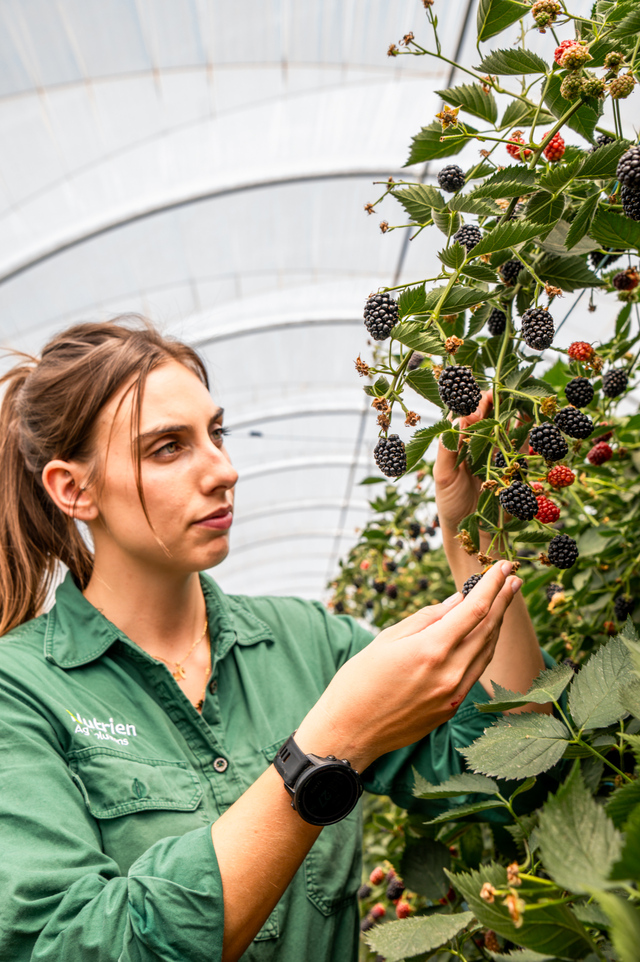
Queensland growers Richard and Melissa McGruddy quickly realised they needed to find a way around supply shortages of fertiliser and chemicals for their strawberry, raspberry and blackberry crops.
Since starting Queensland Berries 20 years ago, it has become one of Australia’s largest privately-owned and -operated berry businesses.
Changing their game plan was not just an option; it became essential.
Queensland Berries provides year-round supply from multiple farms in the Caboolture and Stanthorpe regions in the state’s southeast under the Driscolls brand to Aldi, Coles, Costco and Woolworths.
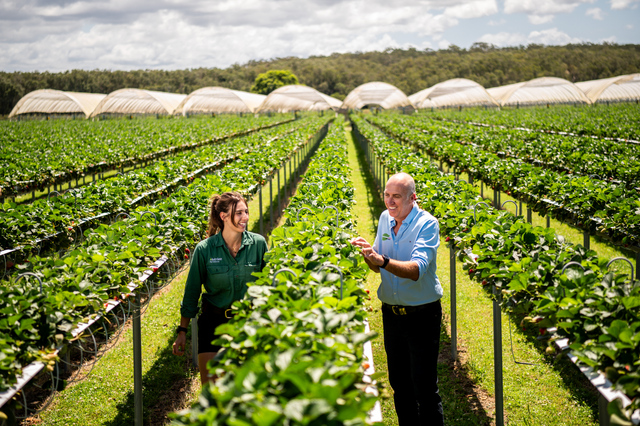
The McGruddys produce about 15 million punnets of strawberries annually using a tabletop system, where strawberry plant plugs are grown in gutters with controlled nutrient application.
Running out of any of the critical elements that comprise their feed recipe can spell disaster.
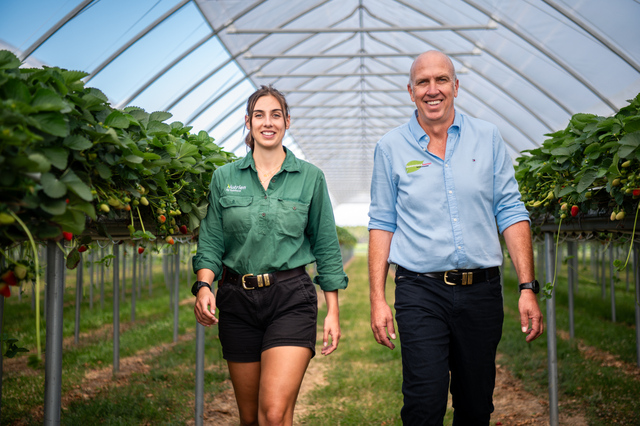
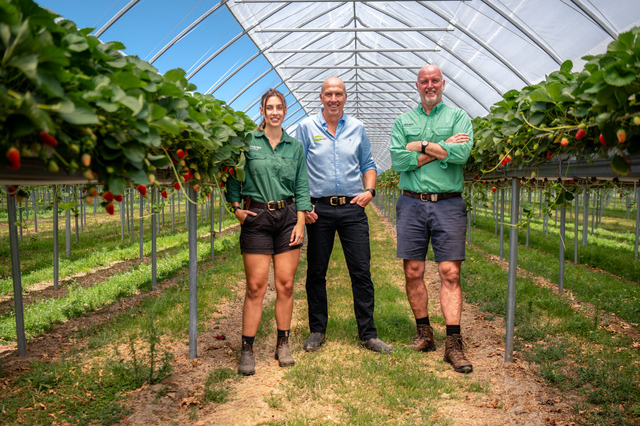
Working closely with their Nutrien Ag Solutions agronomist, Millie Monk and branch manager Karl Tollner – who are based in Yandina and have serviced Queensland Berries for the past 15 years – the McGruddys tackled the challenges head-on.
By creating a six-month forecast for their chemical and fertiliser needs, they could finally achieve a stability that had been hard to come by.
This foresight allowed them not only to lock in stock orders every March but also to secure better pricing, helping to ease the financial unpredictability that often plagues agriculture.
“Thanks to Covid-19 we developed a six-month forecast for all our chemicals and fertiliser usage, which allows Karl and the team to go ahead and source that and give us really good pricing because we’re locked in,” Richard said.
“We needed a stable business partner with the capacity to source and store large amounts of the crop products that we required and Nutrien’s significant buying power and national network gave us the confidence that they could deliver.
“So, each March we lock in stock orders and extend our finance terms.”
Karl and Millie are regular visitors to the Caboolture farm, working alongside Queensland Berries’ in-house agronomists and Richard’s daughter Lucy, who has completed her first year of a Bachelor of Ag Tech and Management.
Together, they collect samples and interpret data from plant, sap and dry leaf testing, to determine what nutrients are needed to achieve optimum plant growth, fruit quality and yield.
“We take a collaborative approach by integrating the two teams of agronomists,” Richard said.
“When the test results come back, our staff get together with Karl and Millie so that we have a broad spectrum of views and initiatives on how to get the best out of the plants.“
Karl Tollner said while Nutrien Ag Solutions agronomists deal with many large and successful growers, the scale of Queensland Berries was unique and required a proportionate level of service.
“We wanted to work with Queensland Berries because right from the start they were an innovative business willing to test new varieties and processes,” he said.
“It’s also about the people and the McGruddys – and their farm managers – have a genuinely happy workplace, so we enjoy the partnership and problem solving, as well as offering the right products and solutions.
“Our work is made easier by the sheer scale of the Nutrien network, which is amazing.
“I’ve been an agronomist in this region for 16 to 17 years and there’s always someone, somewhere, in Nutrien that has the information you need or a different perspective or point of view to learn from.”
Millie Monk has been in Yandina for two years and makes weekly visits to work with the Queensland Berries team.
“Agriculture is continuously evolving and finding new ways to improve productivity,“ she said.
“No matter how long you’ve been in the business it’s always inspiring to work with down-to-earth, family growers like Richard, Melissa and Lucy, who share your passion for the industry and put their trust in your capabilities to get the best outcome for them each season.
“They always seem to be a couple of steps ahead and they were one of the first to make the move to tabletop growing, which can be much more controlled, easier to pick and provide more yield per hectare.
“We’re already well into planning for next season and leveraging the data from this year, as well as finding ways to incorporate new crop protection technology set to hit the market.“