
Get the latest news to your email inbox FREE!

REGISTER

Get the latest news to your email inbox FREE!

REGISTER
HomeNewsMicro(needle) solution for major biosecurity issue

Micro(needle) solution for major biosecurity issue

An innovative project exploring a quick and cost-effective way to combat plant disease has received funding from the federal Department of Agriculture, Fisheries and Forestry (DAFF).

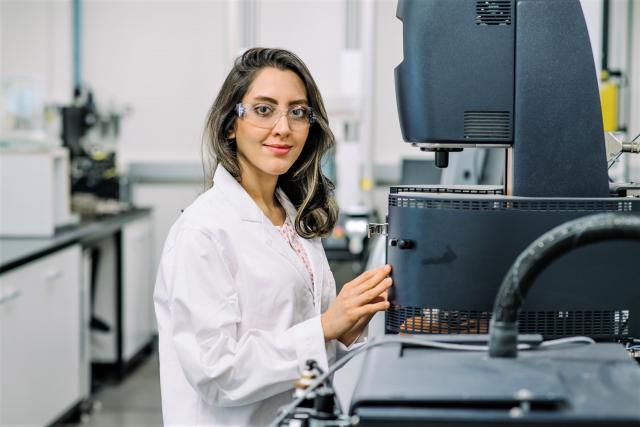
Dr Zahra Faraji Rad will lead a team from the University of Southern Queensland to develop microneedles that detect high-risk plant pests and pathogens at Australian borders.

The proposed device will act as a field-portable “sample-in-result-out” tool, fast tracking biosecurity detection times.

The project is one of 24 innovation program pilots funded this year through the DAFF’s Biosecurity Innovation program.

Dr Faraji Rad said she would develop a customised, nano-fabricated microneedle to extract plant tissue samples.

“The biosecurity innovation program joins my research in microneedles technology with a separate project looking into nano-biosensors at RMIT University to develop a diagnostic tool for plant disease detection,” she said.

“The end-product diagnostic device itself will use microneedles to extract cell contents from a suspect plant and then immediately scan the samples with biosensors.

“It would allow multiple plant pathogens to be detected instantaneously in the field by generalist biosecurity officers, minimising the need for laboratory-based diagnostic process.”

DAFF deputy secretary of biosecurity and compliance Dr Chris Locke said once the technology was proven, a handheld prototype would be developed for frontline biosecurity officers to use.

“At the moment our biosecurity officers in the field have to send samples off-site for laboratory testing for high-risk plant pests,“ Dr Locke said.

“This diagnostic tool could allow fast and accurate testing in the field, which will speed up biosecurity screening processes and contribute to a sustainable and effective national biosecurity system.“

Microneedles are currently used in the medical field for sample extraction and diagnostics.

Digital Edition
Subscribe

Get an all ACCESS PASS to the News and your Digital Edition with an online subscription

Pillar of the community

The Crows Nest Showgrounds hold a special place in the region’s history, reflecting the town’s early beginnings as a timber-hauling stop and its growth...
More News

Prepare for the worst

So climate change is here and Mother Nature is showing us how much she can throw at our great island continent. Hundreds of...

No supermarket transparency for families in 2026: Littleproud

As families head to the supermarkets in 2026, they will probably realise that since Labor promised big action, to make prices fair, little has...

Course targets innovation

A new micro-credentialled cotton education program is set to strengthen skills and fast-track the uptake of innovation across the Australian cotton industry. The Cotton Research...

Growing millet crops

Millet crops sometimes get a bit forgotten when farmers make their summer planting decisions. So, I wanted to remind folks of how handy and...

EU Omnibus Changes: How CSRD and CSDDD Impact Supply Chain Due Diligence

Did you know European sustainability regulation has entered a new phase? A new set of updates known as the EU Omnibus has now been...

Durable and sustainable

Australian Concrete Posts (ACP) stands as the nation’s largest manufacturer of prestressed concrete posts, renowned for their exceptional durability and quality. With a purpose-built...

Cashing in on craze

Five and a half hectares of ponds stand between North Queensland aquaculture producer Nathan Cleasby and his goal of building the largest redclaw crayfish...

Summer crop mixed bag

Summer crop conditions across southern and central Queensland are proving to be a mixed bag, with early-planted sorghum delivering strong yields while later crops...

Building a stronger workforce

New research is set to improve understanding of the factors driving agricultural labour and skills shortages across five of Australia’s key food and fibre...

Record intake cottons on

Strong demand for the 2026 Australian Future Cotton Leaders Program (AFCLP) has delivered the largest intake in the program’s history, following a record number...