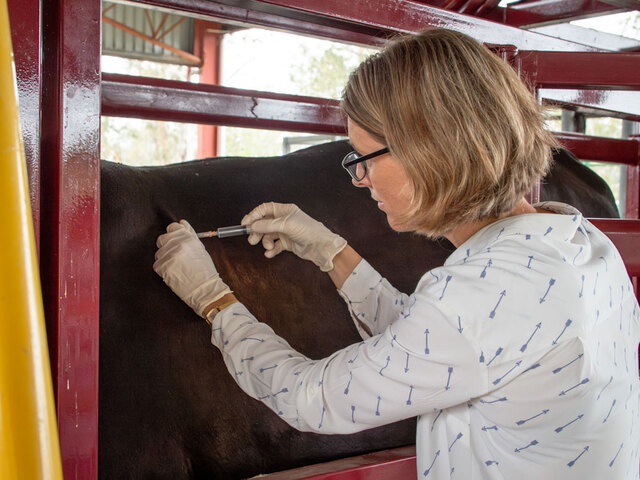
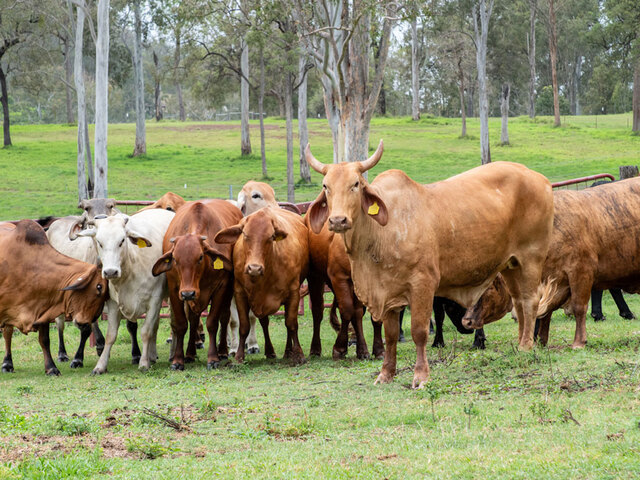
A vaccine developed at The University of Queensland has proven highly effective in early trials to address one of the country’s top cattle pests.
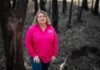
Dr Hannah Siddle from the Queensland Alliance for Agriculture and Food Innovation said the cattle tick vaccine was created by the Tabor laboratory at UQ’s Centre for Animal Science after more than 18 years of research.
“Professor Ala Tabor led small trials of the vaccine that have shown promising efficacy and we are now moving to larger trials,” Dr Siddle said.
“The Australian beef industry loses $128 million a year because of cattle ticks, and when you look globally, those costs swell into the many billions.
“The parasite causes loss of condition in the animal and the ticks also carry and transmit potentially fatal diseases.
“The beauty of this vaccine is that it protects the cattle from the effects of tick feeding and breaks the life cycle of any tick that bites a vaccinated animal – they don’t lay as many eggs and those eggs don’t hatch with the same efficiency.”
The existing treatment is to spray or dip cattle with chemical pesticides.
“That’s not a sustainable solution for the industry – we want to reduce the amount of chemicals in the food chain,” Dr Siddle said.
“There are also concerns ticks are developing resistance to current treatments, which is happening more often in different parts of the world.”
Thanks to an Australian Economic Accelerator Seed Grant awarded to Dr Siddle, the vaccine candidate is being tested on 30 cows in a proof-of-concept trial for commercial adoption.
“This trial will allow us to bridge the gap between the basic research and proving it’s a cost-effective vaccine that works in a larger number of animals, allowing us to get a commercial partner on board,” Dr Siddle said.
Professor Tabor said the process was the culmination of a great deal of work.
“Getting to the commercial phase of anything is like a dream come true because you work on it for so long,” Professor Tabor said.
“It’s really special to be in a translational research space where you work on something that may actually be used in Australia and elsewhere.
“There are other vaccines around the world that people are claiming have good efficacy, but I think we are ahead of the game.
“This grant will allow us to prove it.”
Early work on the vaccine was funded by Meat and Livestock Australia, The University of Queensland, the Beef CRC (2005-2012) and the Queensland Government via the Department of Agriculture and Fisheries and the Qld Smart State Fund.