Agriculture is a rapidly changing sector, with consumer demands, advances in technology and a nationwide sustainability push transforming agribusiness operations.
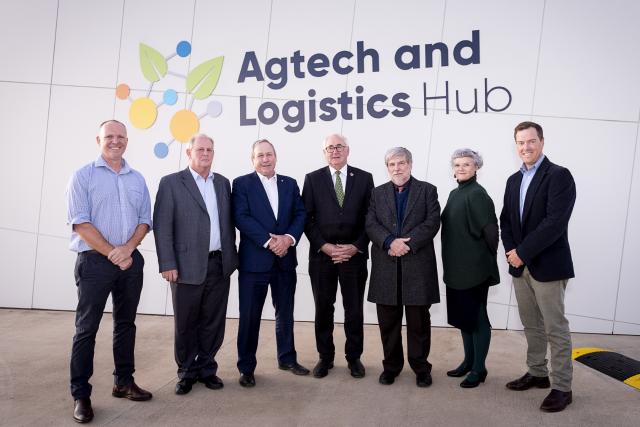
The pace of change can be hectic, which doesn’t always leave time for reflection. But it’s something we’ve made some time for of late, prompted by the Agtech and Logistics Hub’s third anniversary.
And it’s been a chance to think not just about how far we’ve come and our evolution into a sector-wide industry-led innovation connector, but also the opportunities that lie in wait around current and emerging challenges and trends.
With Queensland Government backing, the Hub officially opened on 18 May 2021 to grow the agricultural value chain through the development of innovation and technology.
Since then, we’ve worked with industry and hundreds of innovators to fast-track adoption of technology in agriculture and food production.
We know farmers are more likely to adopt technologies they understand, so a key focus has been bridging the knowledge gap between their challenges and available solutions.
A challenge has been getting them connected, with fast and reliable internet critical to the adoption of digital technologies.
Many farmers have had limited connectivity, preventing their use of everything from drones to robotics.
Our team has improved the connectivity of more than 2000 sites, including farms, agricultural businesses and communities.
Another major challenge for farmers has been integrating traceability systems into their operations, with many still largely reliant on paper documents rather than digital files.
Demand for traceability, which is the digital tracking of a product through all stages of production, processing and distribution, has surged due to the growing number of consumers wanting assurance around food quality and provenance.
We’ve supported organisations of all sizes with their traceability requirements, from farm gate to checkout, and have embarked on projects with supermarkets, Meat & Livestock Australia (MLA) and the federal government to enhance traceability through the food
supply chain.
We’ve also helped unearth innovative solutions in biotechnology, which is essentially the process of using living things to create or change products.
Producers and growers are having to change how they manage crops, particularly in relation to pests and diseases, amid growing consumer demand for agricultural products with little or no chemical residue.
Biotechnology will continue to provide new ways for farmers to improve crop quality and yields. We will also need to keep connecting farmers and help them adopt traceability systems to ensure they aren’t left behind in our increasingly digitalised sector.
But what other key challenges are ahead?
One is the adoption of technology powered by Artificial Intelligence (AI), from drones to agricultural robots. While many agribusinesses know AI can bring benefits including productivity and profitability improvements, few understand how to integrate it into their
operations.
Farmers will also need to use more sustainable crop and pasture management methods to meet Environmental Social and Governance (ESG) guidelines, which can determine whether they can export to certain markets.
We’ve recently embarked on a circular economy project to grow innovative sustainable practices in Queensland’s agribusiness sector and, in conjunction with Grains Research and Development Corporation (GRDC), are delivering an accelerator seeking
technologies to complement grain growers and their commitment to sustainable, responsible farming.
We also expect to see emissions reduction become even more of a focus, with the Federal Government developing six sectoral plans, including one for agriculture, outlining how we can transition to a net-zero economy.
We’ve been agile in responding to the rapid change our sector is experiencing, and our goal for the year ahead and beyond is to grow our collaboration with businesses across the food supply chain, including farmers, to help overcome challenges.
Finding solutions for them remains at the heart of everything we do.