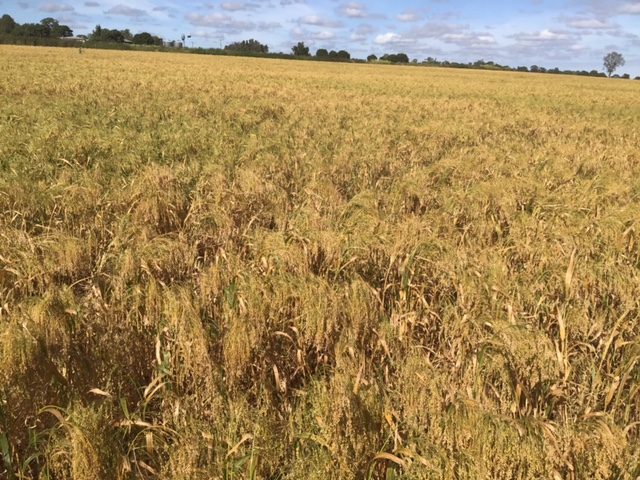

Millet crops sometimes get a bit forgotten when farmers make their summer planting decisions.
So, I wanted to remind folks of how handy and universal a crop of millet can be.
Millets or Panicum are small-seeded and quickly maturing grass-type summer crops, ideal for double- or changeover cropping.
They are mostly an annual crop, however over the years some perennial legacies may remain with basic annual millet crops.
Variety options like White French, Red Panicum and Panorama are your main grain types along with dual-purpose varieties like Japanese and Shirohie millet. You also have various Pearl or Bulrush millet types under the Pennisetum families for hay or grazing.
The entire millet crop family can have many have multi-purpose uses like grazing, grain and even hay production.
Pearl millets are very popular grazing species around the world due to being well-suited to growing areas faced with drought, lower soil fertility levels, high salinity levels, low pH or high-temperature days.
They can be quite quick in the growing stakes, taking only a few days to flower. Red Panicum flowers in the mid-50’s, while Siberian millet takes around 80.
Millet seed costs per hectare are usually fairly minimal, with a kilogram of millet being about 150,000 seeds.
However, your soil structure needs to be reasonably fine; the seed’s contact to the moist soil can be enhanced by a post-plant rolling with a flat-tyred roller – one of my first tractor jobs on our family farms in the South Burnett many decades ago.
That’s not so much the case anymore these days, but one big benefit of millet is the easy grazing management with no hydrogen cyanide or Prussic acid risk.
Still, in rare situations – just like with other annual forages – nitrate can accumulate in the plants after certain conditions such as good rain on a very droughted crop or a frost event occur.
One downside of millets is the lack of many suitable herbicides for weed control, especially grasses. Crop competition is the only way for millets to survive in weedy grass paddocks, so plant plenty of millet seed in these blocks for a competitive crop.
Broadleaf weed control is reasonably easy with good products like Starane (fluroxypyr) as a base product, followed by the addition of low rates of atrazine to most species of millet.
I was taught (and learned myself) to be cautious when dealing with broadleaf weeds in millet crops, so I am very wary of using any atrazine on Japanese and Shirohie varieties and equally as wary of using any 2,4-D on any millet species.
The lack of label registrations in this day and age don’t help the confusion, especially for younger agronomists.
Millet’s nutrition requirements cover the usual plant needs of nitrogen, phosphorus, potassium, sulfur and zinc.
Perhaps split up your applications of nitrogen in those good years – if you can pick them – as crop lodging from excess nitrogen can occur.
For experienced millet grain growers, swathing or windrowing of their crops is very common as millets – especially White French millet – can be very uneven in maturity.
Mark Schmidt of Deacon Seeds informs me that new crop grain millet prices currently sit around $750 for White French and up to $850 for Japanese and Shirohie.
So, millet could be a handy addition to your farming system – and when you’re done with it, quite good stubble remains for your conservation farming tactics.