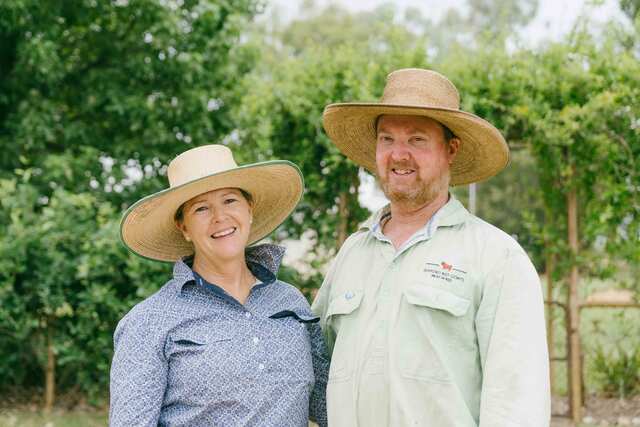

Choosing the right livestock for their drought-susceptible property hasn’t always been an easy decision for western Queensland primary producers Anita Dennis and Joe Taylor.
Anita and Joe began with sheep but, shortly after, came a rise in fatal wild dog attacks.
They then transitioned into cattle but were met with the millennium drought.
“It was quite a turbulent five, six years, and we couldn’t sustain those sorts of losses,” Anita said.
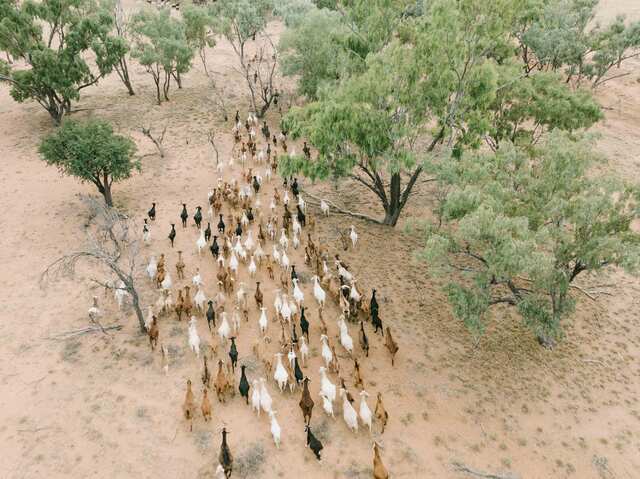
Now Anita and Joe run a herd of Rangeland-cross Kalaharis and Australis Blacks goats and take on agistment when the feed budget allows.
Anita said the goats had adapted well to their two properties, Coolagh, between Barcaldine and Blackall, which she and Joe bought from Joe’s parents with a QRIDA First Start Loan in 2009 and Lorne, near Aramac.
“We were wanting an animal that could give us a good return for little inputs and that’s what we found with the goats,” Anita said.
“We were quite fortunate. When we got in, goat prices were only about $3.50 a kilo but we could see the return and we were able to ride that big wave the goat industry went through.
“The First Start Loan also helped us greatly with the lower interest rate and interest-only period for the first five years given the tough times we had when we started out.”
Anita and Joe then used the Sustainability Loan to help them build exclusion fencing around their remaining country.
“The goats were naturally coming down our river systems and so we thought let’s put them behind wire for regrowth control,” Anita said.
“When we realised the exclusion fencing was going to pay us back, we were confident to borrow money from QRIDA through the Sustainability Loan and we fenced the remainder of Coolagh.”
Although Joe and Anita have enjoyed three good summers, the impacts of the millennium drought have stuck in their minds.
So, over the past year they have improved the climate resilience of their properties with a QRIDA Drought
Preparedness Grant and Drought Ready and Recovery Finance Loan.
“We also installed 34 kilometres of poly pipe and set up 24 different water points with troughs and tanks to distribute the stock and make better use of the pasture,“ Anita said.
“At Coolagh, we pump water from the Barcoo River. To reduce the strain on the pumps during summer and to provide water to areas far from a reliable source, we built two dams equipped with solar pumps.
These dams also supply water to various points in other paddocks.“
Joe said his and Anita’s business plan helped make their decision-making easier during stressful times.
“It’s a living, breathing document that changes over time with our situation and it helps us treat the operation like a business, not a lifestyle, so we don’t get attached to our livestock,” Joe said.
Regional area manager for Central Highlands and West Bradley Whittington, explained he helped Joe and Anita with their applications to QRIDA for financial assistance.
“We discussed the guidelines and what paperwork was needed,” Brad said.
“I helped them finish their livestock schedule and cashflows, then I reviewed them,made sure the figures worked out to what they were predicting and what was in the cash flows, and ran through their business plan.”
Joe said he and Anita had regularly met with Bradley, their local QRIDA regional
area manager, to talk about the QRIDA financial assistance available to benefit their operation as well as broader industry updates.
“Brad has always been at field days and social events, so we’ve seen him out and about a lot and we’ve been able to build a very good relationship with him,” Joe said.
“Our relationship with Brad is very open and trustworthy. He is very approachable – we ask him plenty of questions and he gets back to us with good feedback.”
Although Joe and Anita know all too well the impacts drought can have on a grazier and their property, they still try to view dry conditions as an opportunity.
“By working with your trigger dates, if the rain hasn’t arrived, you start selling down your livestock,“ Anita said.
“When a rain event occurs, it improves your pastures and provides a feed budget and you can then bring in livestock for agistment.“
Joe needs just a few words to sum up his drought preparedness and recovery advice for other primary producers.
“Look after yourself and look after your land. You’ll come out pretty good.”