“Don’t come home until you’re finished. We work from sun up to sun down. If your hands are soft, you haven’t worked hard enough. We don’t stop for breaks here. One more run and then you can knock off …”
Farmers have long been represented as a tough breed who work around the clock – and expect their workers to do the same.
But now, with labour shortages at an all-time high, the industry is changing tack, preferring a human-centred, psychological approach to attract and retain workers.
Leading the charge is the Australian cotton industry.
First-of-its-kind research from rural psychologists has found cotton farmers and their staff are moving away from the stereotype of agriculture being a “tough“ industry by focussing on a human-centred approach.
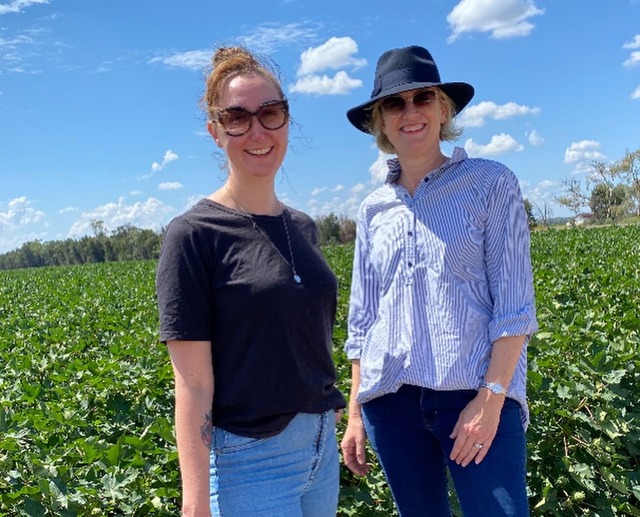
Rural psychologist Chantal Corish lives on a cotton farm with her husband and, thanks to support from the Cotton Research Development Corporation (CRDC), is undertaking a PhD research project with Central Queensland University.
She is exploring the effect psychological safety has on team learning, performance and wellbeing among cotton farming employees, as a step towards achieving a positive workforce culture.
Alongside work from Dr Nicole McDonald and leadership expert Jo Eady, this team is using 10 years of cotton industry workforce research and collaborating with cotton growers to investigate evidence-based solutions to current workforce challenges.
Its findings will form an integral part of the larger CRDC project SHIFT: Delivering Best Practice to Manage Future Workforce Skills.
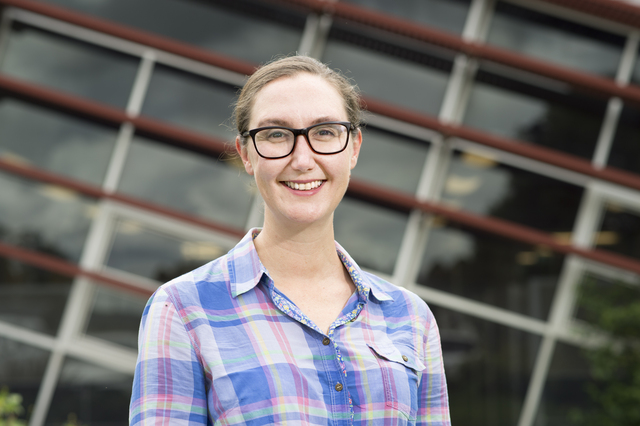
Dr McDonald, an organisational psychology researcher within the Australian cotton industry, said as investments in social science and workforce research had been vast, it was essential the transferable lessons gained from this “brilliant“ knowledge were understood.
“We wanted to amplify examples of the process and normalise sharing this kind of information as we move along to ensure it’s a two-way flow of information,“ she said.
“So, with the SHIFT project, you’ll see we’ve strongly co-designed everything. It’s not asking cotton growers to make big changes. It’s asking them to make small shifts on some new things to start to move towards better, healthier, safer workplaces.
“And, I guess as a researcher, one of the greatest things about working in agriculture is you are pushed, unlike any other person who may be doing more theoretical kind of research, to ask, ’What’s the return on investment here?’ As you’re essentially using money farmers have paid through levies on crops they’ve grown.
“So, the aim of this project was to translate that into something that was a return on investment from the research.“
While it’s typically rare for people in agriculture to talk about work, health, safety and social psychology, CRDC is leading these discussions to help cotton growers identify and implement practical tools to better attract, develop and retain their workforce.
The SHIFT project team is chatting with growers and farm managers to practically work on the ‘people’ part of their businesses.
Here’s what they found:
* Recruitment is harder than it has ever been.
* New team members are ‘greener’ than they have ever been.
* Technical and non-technical skills need development.
* Psychosocial wellbeing is a challenge.
By better understanding the problem, they can create targeted solutions that will help make agriculture the employers of choice and the industry of choice.
About SHIFT:
* A framework that takes a bottom-up approach, with growers and researchers coming together to discuss and workshop what they can do to secure an engaged and adaptable workforce.
* The goal is to make agriculture the employers of choice and the industry of choice.
* It contributes to a program of work being led by the cotton industry that focuses on creating careers in agriculture from “K to grey”, meaning from a young age (kindergarten) right through to the old age (retirement).
* This program of work is about professionalising agriculture and ensuring those employed on-farm have safe and satisfying careers.
* It’s also busting myths that a career in the industry means only out in the field. It’s about creating accessible pathways so people know the diversity of jobs on offer and what a long-term career pathway can look like.
Workforce stats:
* The agricultural industry is worth an estimated $78 billion to the Australian economy each year and that’s expected to grow to $100 billion by 2030.
* Worker shortage, however, is an ongoing challenge across the industry.
* The number of agricultural workers has decreased in recent years, from above 300,000 people during 2020 to 271,500 in February 2024, according to latest ABARES stats.
* The number of working holiday makers declined steeply from more than 141,000 visa holders to less than 19,000 visa holders between the closure of Australia’s borders due to COVID-19 and their reopening.
* Their number has since increased to more than 181,000 as of February 2024. The expansion of the Pacific Australia Labour Mobility (PALM) scheme has been the big driver used to tackle the labour crisis.