Research has revealed that many Australians have poor awareness of Australian native bee species, revealing a significant gap in public understanding of the nation’s bee biodiversity.
Australia is home to more than 1700 described native bee species, with hundreds more yet to be scientifically identified – a diversity that remains largely unrecognised by the public.
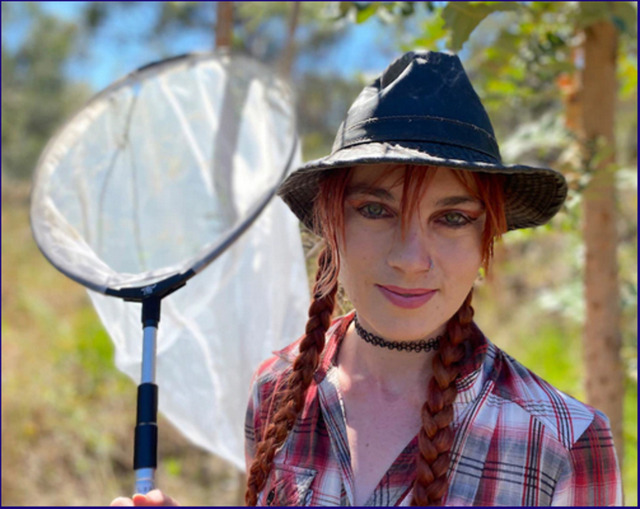
A study led by University of Southern Queensland (UniSQ) native bee scientist and conservationist Dr Kit Prendergast surveyed members joining the Facebook group ‘The Buzz on Wild Bees’, to explore how people engage with Australia’s native bees.
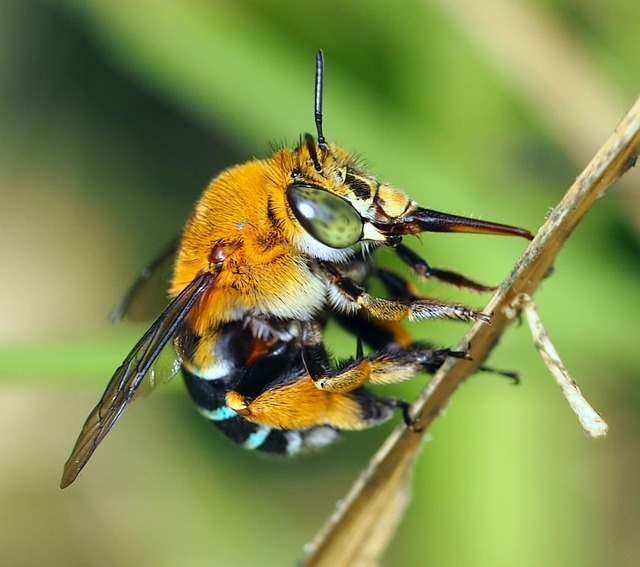
When asked to name their favourite Australian native bee species, most participants gave only general group names, such as “blue-banded bee”, rather than a specific species or scientific name.
Dr Prendergast said the findings, published on 10 November in the journal Insects, highlight that while Australia’s native bee diversity is extraordinary, it remains largely unrecognised – and that some of the most unique and threatened species are being overlooked.
“Entire bee families and subfamilies that are found only in Australia, including the Stenotritidae and Euryglossinae, didn’t appear in any responses,” Dr Prendergast said.
“Even species at risk of extinction were absent, showing that the bees most in need of attention aren’t getting the attention they need.”
This lack of awareness is part of a wider trend in which attention and conservation efforts are often dominated by the European honey bee (Apis mellifera) – a non-threatened, introduced species that receives widespread publicity due to its economic importance.
“The European honey bee plays a major role in agriculture, but it differs greatly from our native bees,” Dr Prendergast said.
“Focusing solely on honey bees can hinder native bee conservation. Honey bees aren’t at risk of extinction and their presence can even harm native bee populations through competition and disease.”
Dr Prendergast said that while the honey bee’s popularity has successfully raised awareness about pollination services, it has done little to advance the advocacy or conservation of native bees.
The research underscores the need for a national education and communication effort to improve the public’s understanding of native bee biodiversity — and to shine a spotlight on underrepresented groups.
“This isn’t just an academic exercise,” she said. “When we rely solely on common names, we risk obscuring biodiversity and losing our connection to the language of nature.
“For example, there’s more than one ‘blue-banded bee’ – different species live in different parts of Australia – but that nuance gets lost.”
The study also found that the native bees most often mentioned by participants – Amegilla (blue-banded bees) and Meliponini (sugarbag bees), such as Tetragonula carbonaria – are the ones with strong media presence and public familiarity.
“It shows that with the right engagement strategies, stories and imagery, we can raise the profile of lesser-known native bees too,” Dr Prendergast said.
“Species like Amegilla can be a great gateway to spark curiosity, while others, such as Xylocopa aerata, which has declined on Kangaroo Island due to habitat loss and competition from honey bees, could serve as important flagship species.”
As Australian Pollinator Week celebrates the vital role of pollinators, Dr Prendergast hopes the findings will inspire a more inclusive approach – one that brings all of Australia’s native bees, not just the familiar few, into the public spotlight.
You can also access the study, ‘An Evaluation of the Popularity of Australian Native Bee Taxa and State of Knowledge of Native Bee Taxonomy Among the Bee-Interested Public’.