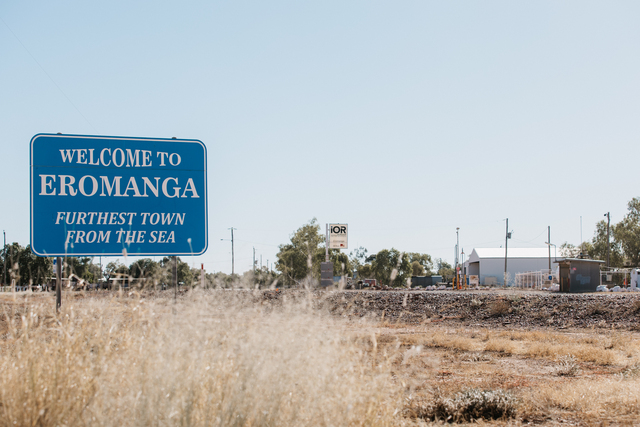
A renewed push to unlock oil reserves in western Queensland is gaining momentum, with the tiny outback town of Eromanga emerging as a potential cornerstone of Australia’s future fuel security.
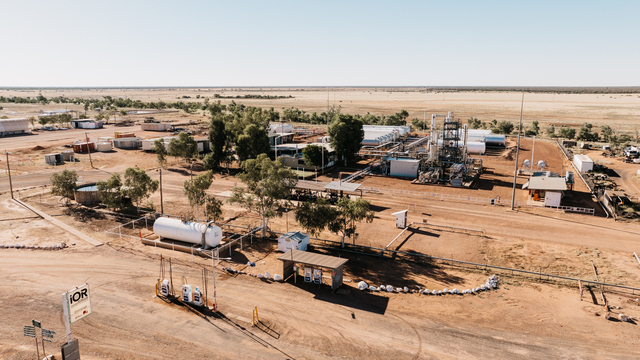
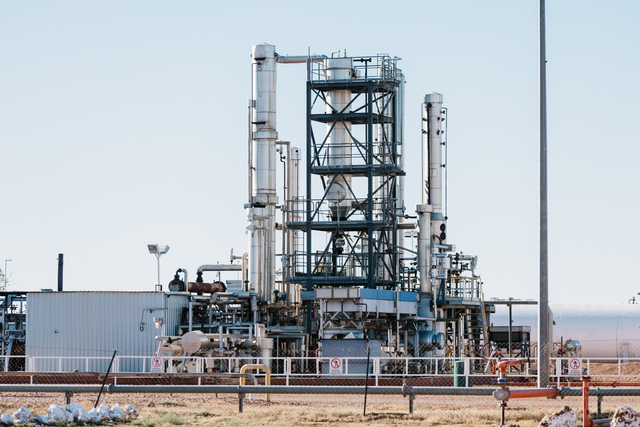
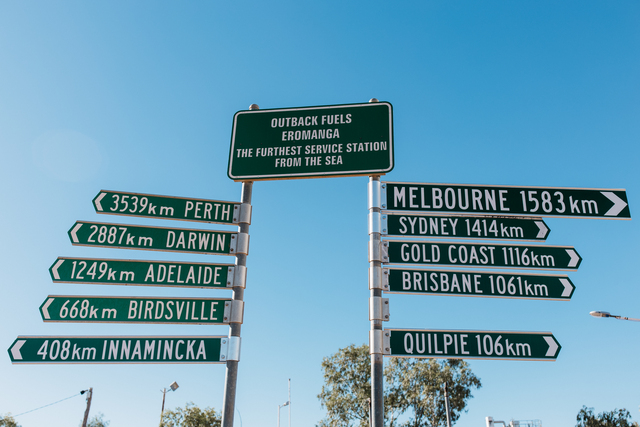
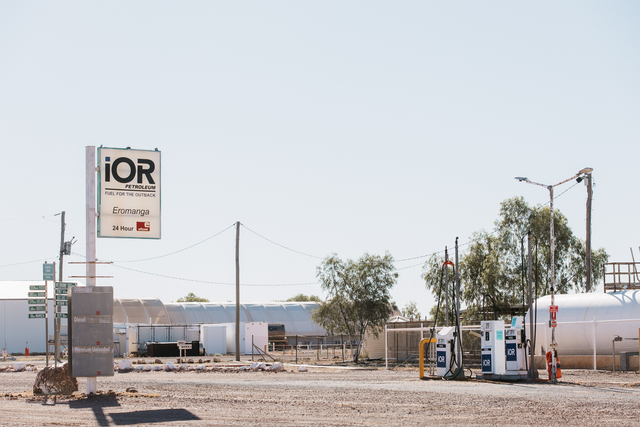
Home to fewer than 50 residents, Eromanga, 108 kilometres west of Quilpie, is uniquely positioned with both proven oil reserves and an operational refinery, a rare combination that industry and local leaders say could help ease pressure on the nation’s fuel supply chain.
The opportunity has come into sharper focus following the Queensland Government’s announcement that the first barrels of oil from the Taroom Trough – Australia’s first new oil field in 50 years – have been sent to Eromanga for refining into diesel.
While welcoming the milestone, Quilpie Shire Council Mayor Ben Hall said attention must now turn to unlocking the far larger and more established reserves in the Cooper Basin.
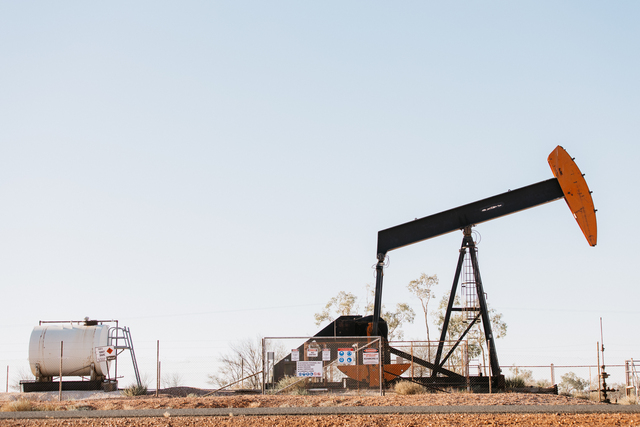
“For more than 40 years, this region has quietly delivered oil production without environmental incident – a track record that stands up under any level of scrutiny,” Cr Hall said. “Our oil is so pure that it is used primarily for underground mining due to its low emission.
“We’re only about 1000km from Brisbane and, despite sitting on the very outer edge of the Lake Eyre Basin, which covers a huge 1.2 million square kilometres, our region is bound by the Regional Planning Interests (Lake Eyre Basin) Amendment Regulation 2024, which currently restricts any further oil extraction from the Cooper Basin.
“We have a phenomenal record of safe oil delivery over four decades – and gas production for over 60 years – geologically we’re a very stable region. There is an incredibly strong argument for increasing production on-site at Eromanga for local refining.
“This would allow us to help ease the current fuel supply crisis. We’re calling for the Cooper Basin to be front and centre in the national discussion on local fuel supply.”
The Eromanga refinery, operated by Inland Oil Refinery since 1986, has long been viewed as a strategically important but underutilised asset. While major East Coast refineries near Brisbane can produce up to 1250 barrels a day, Eromanga currently produces about 635 barrels a day, generating 10.25 megalitres of diesel annually, a figure constrained by regulatory limits.
With Queensland accelerating development in the Taroom Trough, existing infrastructure in Eromanga is now being recast as critical to boosting domestic fuel production. However, Cr Hall said the current focus on Taroom overlooked the scale of resources already proven in the Cooper Basin.
“There is a real opportunity here to refine more product locally, particularly given the volume of oil sitting in the Cooper Basin,” he said. “We have been called the ‘Kuwait of Australia’ and, when you consider what we’re sitting on, that’s not overstating the oil reserves that can be safely accessed in our region.
“At a time when global fuel markets remain volatile, it makes sense to maximise what we have onshore and close to where it’s needed. The Taroom Trough has low capacity, with only a handful of wells operating, while the Cooper Basin has hundreds of wells with known capacity and commercial infrastructure already established by Santos and BHP.
“Local production, rather than transporting oil on the Warrego Highway to Eromanga, would also relieve pressure on road infrastructure, which increased large freight movements from Taroom will negatively impact.”
Cr Hall said the council’s advocacy for the region’s resources had been ongoing for years, long before fuel security became a national concern.
“Yeah, we’ve been advocating for it. I’m a new mayor, well, I’m 18 months in and I’m a new councillor so it was my predecessor’s campaign also before that,” he said.
“We have been advocating for the resources in our region and their importance not only to our economy, which is what we were advocating for, but also the broader economy of Australia, it now turns out.
“Our advocation of these resources has really fallen on deaf ears previously. You know, ‘the against’ always get a lot more wind than ‘the fors’.”
He said the region had long held significant untapped potential, but policy settings had limited its development.
“The resources there are foundational and our leaders in the late 80s/ early 90s had enough vision to put a refinery here all those years ago, forecasting the prospect of the oil coming in, only to see it suffer in recent years as a result of legislation that locks the oil away from it,” Cr Hall said.
“So, you know, seeing a refinery in the middle of nowhere starving for oil when there is reportedly plenty of oil at foot seems, you know, it just shows us the direction we’ve gone in potentially as a nation.”
He pointed to the impact of the Regional Planning Interests (Lake Eyre Basin) Amendment Regulation 2024 as a key constraint, arguing it had limited supply to the point where the refinery had struggled to operate at capacity.
“The refinery was only operating three days a week because it was unable to get enough oil from the region,” he said.
“That was due to legislation locking up the river and lake air basins under the Western River Alliance. It was a very, you know, in my opinion, a very narrow view of a window based on the environment and the impact in that frame. And I think this highlights a broader economic impact that the resources have and our sovereign vulnerability that we obviously have.”
The council is now calling for a review of both state and federal policy settings, including the Regional Planning Interests regulation and the Environment Protection and Biodiversity Conservation Act 1999, to better balance environmental protections with economic and energy security outcomes.
Cr Hall said the stakes extended beyond local jobs and investment, warning that regional communities were being pushed toward economic unsustainability.
“We’ve been out here battling it for our economic resilience and for our communities, you know, like economic resilience, but also just, you know, that sort of thing on our own,” he said.
“I think for far too long, Western Queensland has been the dumping ground of goodwill. We’ve got millions of acres of carbon farming covering our land, which has caused some reduction in our production on the primary industry side of things. We’ve got 200 kilometres of redundant rail line that we travel on to our nearest town to the east, Charleville. We’ve got legislation pulling down our resources sector and, you know, it’s painting us into an economic corner of unsustainability. As a region, we can no longer endure it.”
Despite the challenges, he believes the timing is right to elevate the issue nationally.
“Look, I think it’s just an opportunistic time for us to bring it to a high level,” he said.
With growing scrutiny on Australia’s fuel supply chains and increasing demand for sovereign capability, proponents argue Eromanga’s combination of infrastructure, proven reserves and geographic position could play a pivotal role, if regulatory barriers are addressed.
“The next logical step is to ensure the Cooper Basin and greater Lake Eyre Basin isn’t constrained from helping Australia at this time of crisis,” Cr Hall said.
“Discussions are already underway regarding potential expansion at the Eromanga refinery to help scale up domestic production. The other part of the equation should be to allow access to oil reserves in the Cooper Basin.
“Eromanga is well-known as the home of Australia’s biggest dinosaur and for being the furthest from the sea in Australia. We’d love to see it equally well known for being at the centre of the nation’s fuel future.”