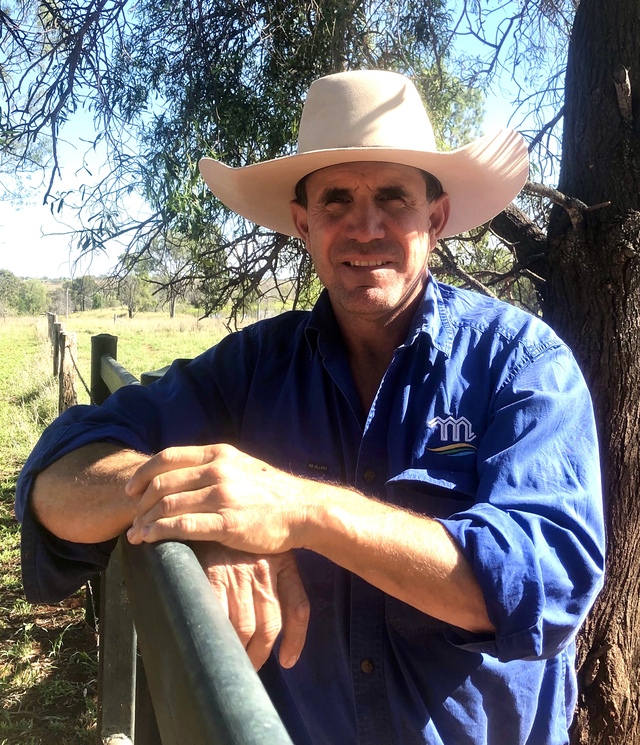
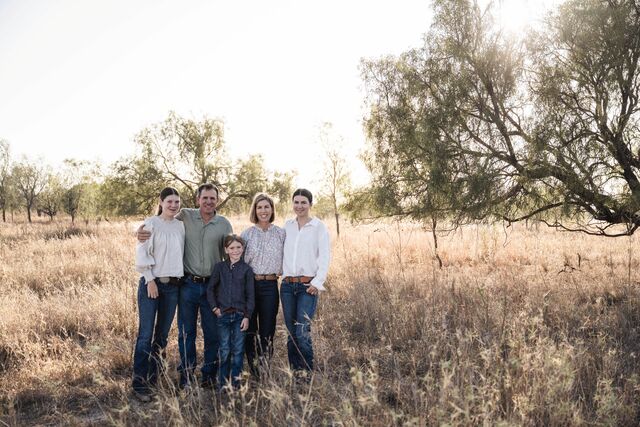
Central Queensland’s Andrew and Claire Mactaggart have been named a finalist in the Beef Farmer of the Year category at The Weekly Times Coles 2025 Farmer of the Year Awards.
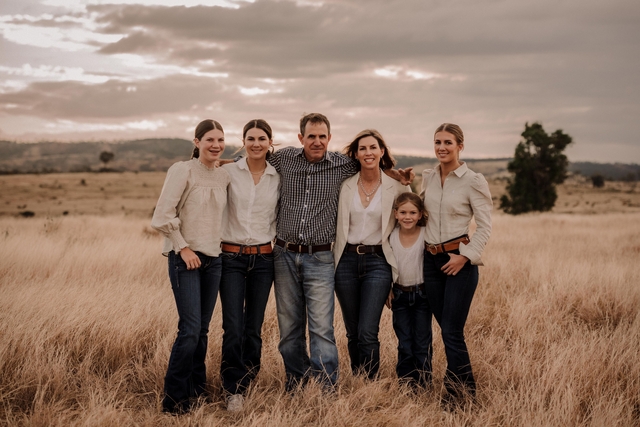
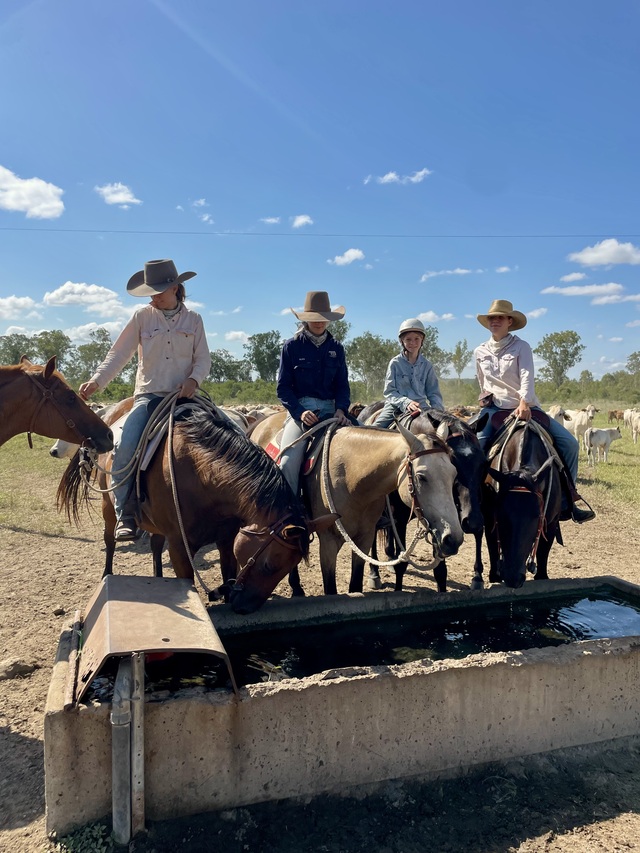
Andrew and Claire, along with their four daughters, Anna, Eliza, Sarah and Grace, manage a 33,000ha family beef enterprise across two main aggregations.
Balcomba, at Duaringa, spans 22,500ha and is primarily used for breeding, while the second property, Wirranda, near Moura, is largely dedicated to backgrounding cattle.
The couple will attend the 2025 Farmer of the Year Awards ceremony on Friday, 13 February, where finalists from across Australia will be recognised.
Claire said being named a finalist was a significant achievement for the entire team behind the operation.
“Being a beef category finalist means a great deal because it recognises the collective; the people who support, mentor and help develop our operation, as well as the systems we have in place,” she said.
“Being nominated as a finalist is a testament to the legacy we are creating.”
When the couple took over management of Balcomba in the late 1990s, the property operated under an extensive grazing system, with large paddocks and uneven grazing pressure.
Since then, the business has undergone a major transformation, with a strong focus on aligning stocking rates with land capability and improving pasture recovery.
“We moved from around 20 paddocks to more than 180 at Balcomba, which has given us much greater control and flexibility over pasture and herd management,” Andrew said.
“Across our properties, more than 95 per cent of the country is in rest and recovery at any one time.”
The pair said the shift had delivered measurable environmental and productivity gains, including improved groundcover, better water infiltration and increased rainfall use efficiency.
Livestock breeding being the family’s main focus, the Mactaggarts operate an open-ended composite breeding program designed for northern conditions that targets 40–50 per cent Bos indicus content alongside British and European genetics.
“Hybrid vigour has been the key to lifting fertility and resilience traits, supported by a strict culling program and shortened joining period to identify low-performing females,” Claire said.
To further expand her knowledge of the industry, Claire studied Agribusiness at the University of Queensland.
She has since written extensively about rural and regional Australia for a range of well-known publications and also served on the board of directors for Beef 2021.
Andrew said their involvement in the Northern Genomics program, in partnership with Meat and Livestock Australia, had enabled them to benchmark their herd, identify areas for improvement and compare their performance against industry averages across multiple breeds.
“As a result, we now use objective measurements, particularly for fertility traits, alongside raw data and systems-based selection,” he said.
“Having access to strong multibreed herd and industry benchmark data allows us to pinpoint what needs work and track progress over time.”
“Genomic testing evaluates traits that are difficult to measure before a bull is used,” Andrew said.
“It’s another tool providing objectivity for our systems-based selection.”
The pair say that since 2017, the results have been significant.
“Around 70 per cent of our females are now above the northern industry average for puberty, up from 47 per cent, while 84 per cent are pregnant within four months of calving, compared with 61 per cent previously,” Claire said.
“Our animal welfare and labour efficiency have also improved through a strong shift towards polled genetics.
In 2017, we had a wake-up call after measuring only three per cent of poll genetics. We are now around 75 per cent in our calf crop.”
Technology also plays a central role in the operation, with tools such as Maia Grazing, Optiweigh, Cibo Labs and remote water monitoring systems helping.
“If it’s shortening the feedback loop or increasing efficiencies in a cost-effective manner, then we will use it,” Claire said.
Looking ahead, the Mactaggarts are excited to continue growing opportunities around ecosystem services and natural capital, including soil carbon and potential future markets that reward nutritional density as well as production volume.
“Succession is an ongoing consideration for evolving family farms,” Andrew said.
More information on The Weekly Times Coles 2025 Farmer of the Year finalists can be found at theweeklytimes.com.au