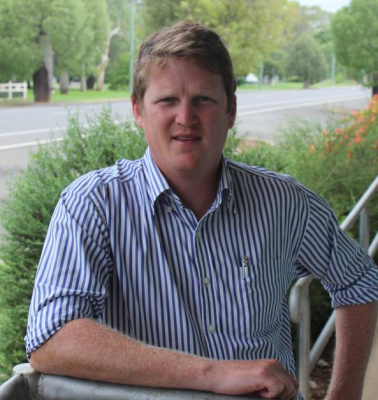
Agri-business lawyer TOM MARLAND, who will be a regular contributor to Queensland Farmer Today, takes a look at what Net Zero 2050 mean for agriculture.
John F Kennedy once said: “The farmer is the only man in our economy who buys everything at retail, sells everything at wholesale, and pays the freight both ways”
Our Federal Government is currently writhing like a crocodile trying to eat a humpback whale about how we can commit to reducing our carbon emissions to zero by 2050.
Much like the crocodile, they feel like they must do it but are not sure how to practically achieve the feat or what the real consequences will be if they succeed.
We are told that “technology” and “abatement” will be the main aim without increasing costs for voters to get to the lofty goals of carbon neutrality by mid-century. There is no doubt that over the last 10 years the costs of solar, wind, battery storage and other renewable energy technologies have decreased significantly in price but there remains an unknown about how we deliver cheap and reliable baseload power which is currently being provided by coal and gas with high carbon emissions.
Under the 2015 Paris Agreement, 197 countries agreed to try to limit temperature rises below 1.5C to avoid the worst impacts of climate change. Experts say that to achieve this target countries need to reduce CO2 emissions to net zero by 2050.
At the end of this month at the COP26 summit in Glasgow, nations will be asked to set out what steps they are taking to move towards this aspiration.
Our Prime Minister is increasingly starting to look like a schoolboy who hasn’t done his homework as his Government have left it until the night before to work out what their position is prior to the COP26 summit.
While some media commentators and segments of the community are critical that the Nationals held the whip handle on the net zero negotiations, to me they are the party best placed to make the ultimate decision.
This is because they represent areas of the country and segments of the community that are most at risk if Australia signs up to a bad deal on carbon emissions.
One of those segments which covers 95% of the continent but is only populated by 1% of its people – is rural and regional Australia. In these areas are also our main primary production industries, our mining sectors, our manufacturing sector and our industrial sector.
These segments don’t seem to attract a lot of votes, but they produce things which help pay for all the trinkets which seem to always find their way into the areas with the most votes – the cities.
A recent YouGov poll of 2421 Australians has revealed that 58% of the population want to switch to 100 per cent renewable energy such as solar, wind and hydro by 2050.
However, when people were asked how much they were willing to pay to reach the net zero target – 43 per cent said they didn’t not want to pay anything, 28 per cent said they would be willing to only pay $300 per year and 14% said they would be willing to pay $600 per year.
Asking someone whether we should do more about climate change is like asking a child if they want an ice cream. It’s a no brainer. But if you asked the child to use their own money to pay for the ice cream they will give you the same blank look as asking people if they want to pay for more climate action.
The true cost of reaching climate zero can be clearly illustrated during the Covid-19 pandemic lock downs. While the whole world basically ground to a halt, global carbon dioxide emissions fell by 6.4 per cent, or 2.3 billion tonnes, in 2020.
The cost of this reduction is estimated to top $16 trillion. This is money borrowed by governments and to be repaid by us. The Energy Transitions Commission has estimated that achieving net zero emissions by mid-century would cost an estimated $1 trillion-$2 trillion globally per year of additional investments.
This is where the quote from JFK finds its relevance is that while the large percentage of the population want more done on climate change and the large percentage of these people live in the cities and have more votes but don’t want to have to pay for anything or suffer any inconvenience to their existing standard of living – the can will always be passed down the line.
The end of the line always seems to be agriculture – who will have to carry the additional costs but not have any mechanism to pass those costs onto the consumer.
The last time the climate change hat got passed around – in the late 1990s after the Kyoto Protocol targets were set – Australian farmers had billions of dollars’ worth of capital value stripped from their farms in the guise of vegetation management restrictions which was actually about reducing carbon emissions.
Today, those rights would be worth trillions in carbon credits – but these were effectively gifted to those in our cities so that they could continue with their standard of living but not have to pay for the environmental footprint.
The Nationals are aware of this injustice and will not be fooled twice.
The best way to offset the increased costs associated with climate action on our agricultural sector is to make available to them the carbon credits that they now store and manage for free. But these carbon credits must be paid by the large proportion of our population who have been riding the climate change bandwagon for free for decades.
We also need to ensure that our action on climate change isn’t just focused on carbon credits and solar panels.
One of the largest carbon emission events and risks we face in this country are avoidable bushfires. In the 2020 bushfires alone, 800 million tonnes of carbon were emitted in three short and horrific months – that’s 1.5 times our total national annual emissions. Some blame these fires on climate change but these fires were in fact manmade disasters as a result of 50 years of landscape mismanagement and false green ideology.
While we need to make sure we preserve the economic foundations of our industries that underpin this nation in our efforts to fight climate change, we also need to manage the rest of our environment properly to ensure that all our hard-earned money and carbon reductions don’t just go up in smoke.