Get the latest news to your email inbox FREE!

REGISTER

Get the latest news to your email inbox FREE!

REGISTER
HomeNewsStay sssssafe this snake season

Stay sssssafe this snake season

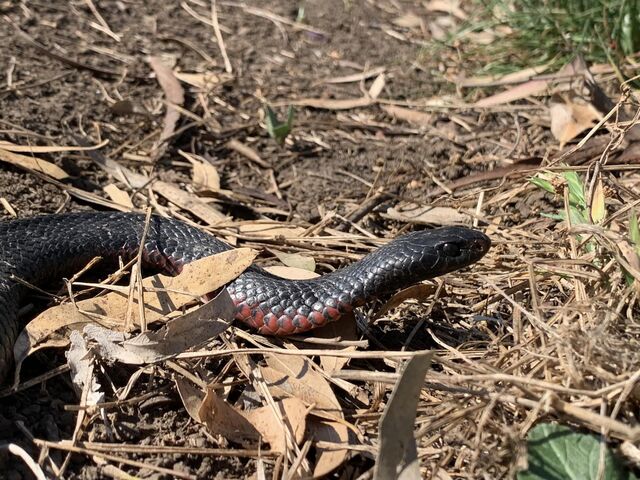
As warmer weather sets in, Darling Downs residents are reminded to be on the lookout for snakes.

So far this snake season (September and October), 39 people have presented to emergency departments with snake bite injuries within the Darling Downs region.

This is compared with 41 people presenting to local emergency departments within the same period in 2023 and 34 in 2022.

Executive director rural, Dr Chris Cowling has emphasised the importance of knowing and applying effective first aid for snake bites, particularly when bushwalking or spending time in more remote areas.

“While snake encounters can occur year-round, typically, we see an increase in snake bite presentations to our emergency departments in spring and summer.

“This is a timely reminder for residents to be vigilant and avoid approaching snakes. If you do spot one, the best advice is to simply leave them alone and back away to a safe distance,” Dr Cowling said.

After a snake bite, or suspected snake bite, people should:

* Check the snake has gone and is no longer a danger to yourself and the person who’s been bitten.

* Check airway, breathing and circulation. If the patient has collapsed, start CPR immediately.

* Call Triple Zero (000) for an ambulance to the emergency department of the nearest hospital. Treat any snake bite as an emergency, regardless of whether you think the snake was venomous or not.

* Don’t attempt to drive yourself to hospital or walk. Sit or lie down and stay as still as possible.

* Apply a pressure immobilisation bandage as soon as possible. Apply a firm bandage over the bite site and then cover the entire limb.

Immobilise the limb using a splint. Any rigid object may be used as a splint – e.g. spade, piece of wood or tree branch or rolled up newspapers.

* Keep still and try to remain calm.

In the case of a snake bite, Dr Cowling also advised what not to do.

“Don’t wash or cut the area, try to suck out the venom or use a torniquet.

“If you find a snake on your property, it’s best to leave it to the experts and call a snake catcher for relocation assistance,” Dr Cowling said.

The most common snakes responsible for bites resulting in emergency department presentations in Queensland are brown, black, tiger and taipan snakes.

* For more information on how to treat a snake bite, visit the Queensland Health website.

Digital Edition
Subscribe

Get an all ACCESS PASS to the News and your Digital Edition with an online subscription

No supermarket transparency for families in 2026: Littleproud

As families head to the supermarkets in 2026, they will probably realise that since Labor promised big action, to make prices fair, little has...
More News

Growing millet crops

Millet crops sometimes get a bit forgotten when farmers make their summer planting decisions. So, I wanted to remind folks of how handy and...

EU Omnibus Changes: How CSRD and CSDDD Impact Supply Chain Due Diligence

Did you know European sustainability regulation has entered a new phase? A new set of updates known as the EU Omnibus has now been...

Durable and sustainable

Australian Concrete Posts (ACP) stands as the nation’s largest manufacturer of prestressed concrete posts, renowned for their exceptional durability and quality. With a purpose-built...

Cashing in on craze

Five and a half hectares of ponds stand between North Queensland aquaculture producer Nathan Cleasby and his goal of building the largest redclaw crayfish...

Summer crop mixed bag

Summer crop conditions across southern and central Queensland are proving to be a mixed bag, with early-planted sorghum delivering strong yields while later crops...

Building a stronger workforce

New research is set to improve understanding of the factors driving agricultural labour and skills shortages across five of Australia’s key food and fibre...

Record intake cottons on

Strong demand for the 2026 Australian Future Cotton Leaders Program (AFCLP) has delivered the largest intake in the program’s history, following a record number...

Rural Australians urged to make health a priority in 2026

As Australians settle into the new year, rural and remote communities are being encouraged to pause, reflect and make their health a priority by...

A decade of movement and mateship: How Ginny Stevens turned a simple idea into a rural wellbeing movement

Ten years ago, in the tiny Riverina community of Mangoplah in NSW, former Tasmanian country kid and agribusiness professional Ginny Stevens rolled out a...

$51m for land protection projects

Restoring and protecting Queensland’s natural landscapes will be a focus for several projects this year. The Queensland Government announced its support for 10 new...