
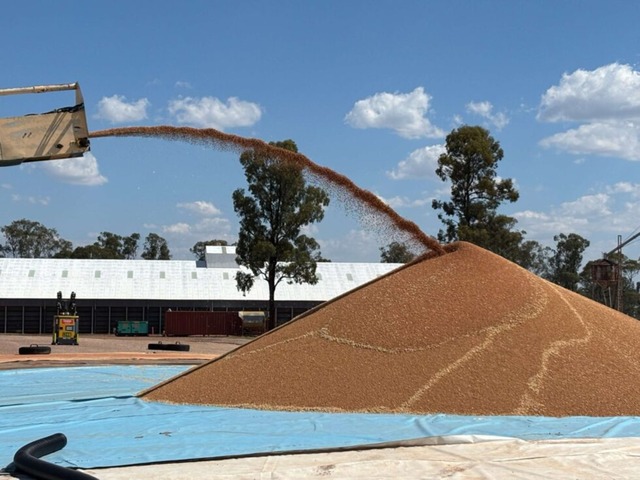
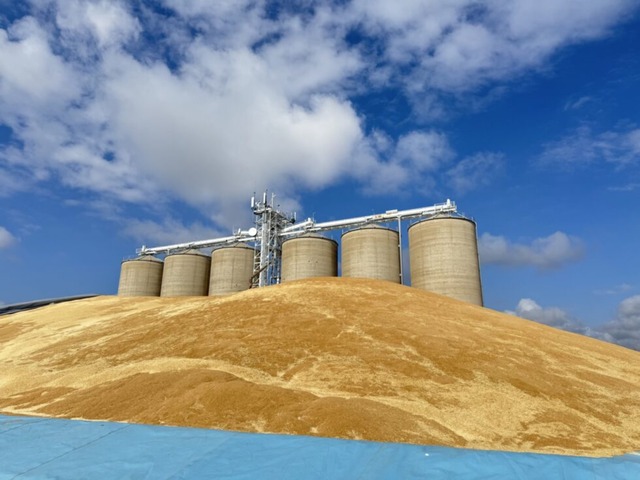
As the curtain closes on winter grain harvests in southern and central Queensland – and the push begins to establish summer crops – growers’ eyes look skyward as they wonder, ‘Where’s that wet spring?’
Moisture is the wildcard. And the next few weeks are pivotal.
If rain falls, growers may ride into summer with a strong second-crop opportunity with sorghum, mungbeans or even opportunistic cotton.
If not, those planted paddocks may simply become a risk rather than a reward.
Farmers on the Darling Downs and Western Downs are racing against time. Stubble management from recent harvests is underway, paddocks are being prepared for sowing and seed orders are being finalised.
Yet, the message is clear: “Planting now is good but follow-up rain is essential to lock in a profitable crop”.
As one farming systems specialist put it, summer crops demand significantly more stored water and are more vulnerable if rainfall falters.
AgForce grains president Brendan Taylor said “significant rain” was needed to ensure successful planting of summer crops.
Queensland growers, he said, would welcome 50mm to boost production prospects.
“It’s been very hot,” Mr Taylor said. “Back in August, it was really wet and we’re all going, ‘Gee, it looks like we’re probably going to have another wet harvest’, which isn’t ideal but it hasn’t rained much since then in a lot of places.
“There are lots of cracks in the ground, which is great harvest weather, but yes, for the summer crop, it’s pretty tough going.
“I would say we’re probably the driest we’ve been here for about three years.”
Mr Taylor finished his winter crop harvest this week at Warra on the Western Downs of southern Queensland
He, like many others, planted sorghum in early September and said it looks “pretty good”, considering it only received 25mm of rain.
More is needed, however. Soon.
“We’ve still got plenty of time for the summer crop but there was a reasonable area of sorghum planted very early at the end of August/ start of September.
“It’s done well to get to where it’s got now, with bits and pieces of small amounts of rain, but it needs a significant amount of rain now to bring it to a reasonable crop.
“December into January is our prime planting window so, fingers crossed, we get some rain in the latter part of November and December, which will stimulate sorghum and mungbean planting.
“Any of the irrigators who have got their cotton in, have had to use a lot of water just to get the cotton in and up, because we’ve had very little help from the sky.”
Mr Taylor said the most disappointing aspect “from our end, amongst all of it” was that commodity prices are flat.
“Last year we were probably trading chickpeas in that $800 to $900 a tonne range. This year we’re in the mid $500s/t.
“It’s really fallen off a ledge and that’s just because there’s very little international demand, which is where most of the chickpea crop goes.”
Sorghum and cereal values, meanwhile, are all about $300/t on farm.
According to this week’s GrainCorp’s weekly Harvest Update, growers in Queensland have delivered 1,273,600 tonnes to its up-country sites over the past seven days.